

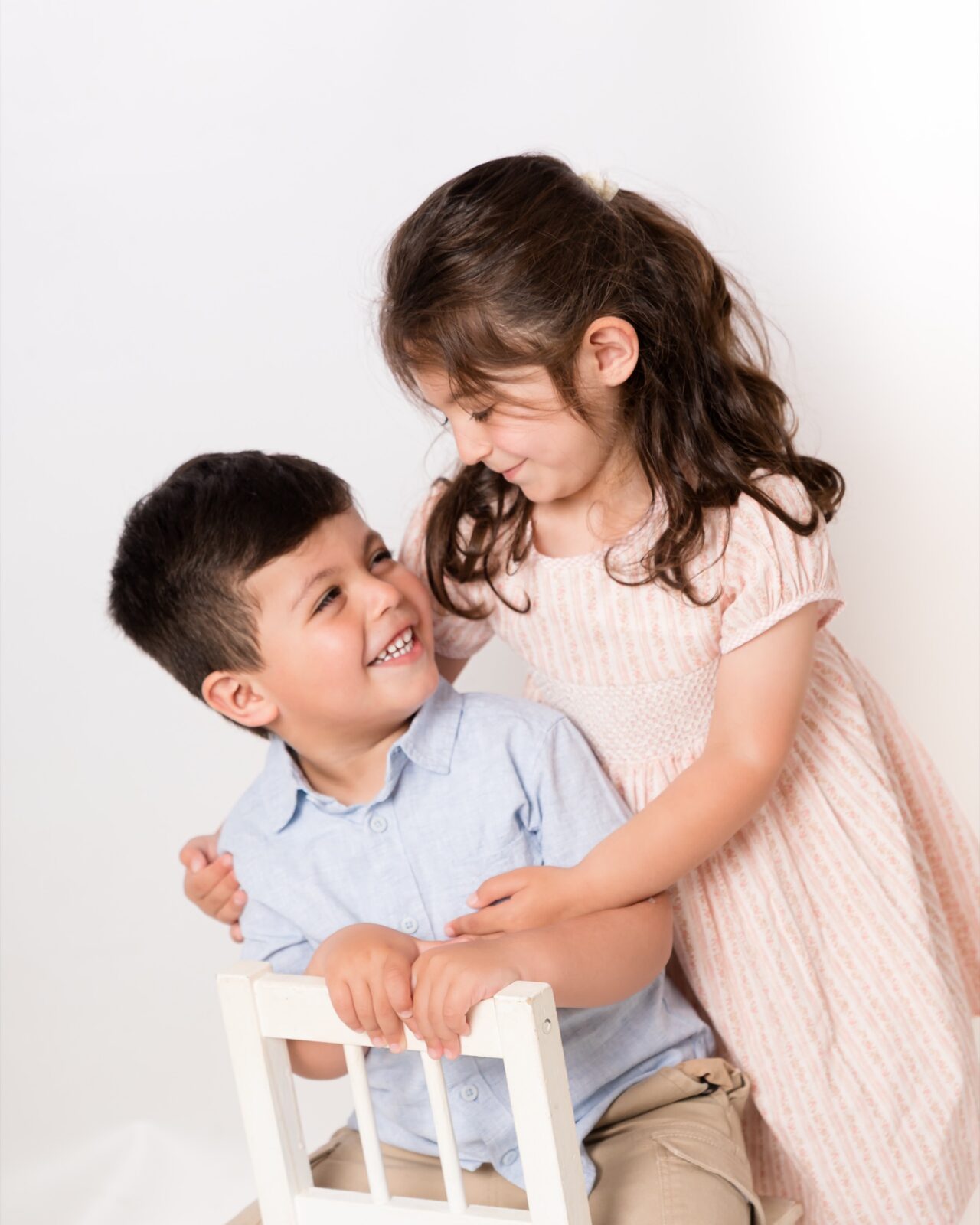
Key Takeaways
- Timing and light are everything — match your session to your children's energy peaks, not just the golden hour.
- A cohesive colour palette, comfortable clothing and a well-scouted location transform a good shoot into an unforgettable one.
- Small preparations — snacks, backup outfits, a relaxed mindset — make the difference between a chaotic session and genuine, frame-worthy moments.
Why Timing Your Family Photo Session Changes Everything
Light is not just a technical consideration — it is the difference between a photograph that looks warm and alive and one that looks like a mugshot taken under a service station canopy.Chasing the Golden Hour (Without the Meltdown)
Golden hour lighting — that generous, buttery window in the first hour after sunrise or the last hour before sunset — is a near-universal flattering agent. It wraps skin in warmth, fills shadows gently, and makes even the most camera-shy family member look relaxed. Midday light, by contrast, is merciless: harsh shadows under eyes and noses, squinting children, washed-out complexions. That said, the clock is not only about the sun. It is about your children.- If your toddler is a morning person, a 9 a.m. session in soft spring light will consistently outperform a 5 p.m. slot where they are flagging.
- School-aged kids often do better in the late afternoon after they've had time to decompress post-school — but not so late that hunger sets in.
- Newborns and babies are most cooperative in the mid-morning window, after a feed and before the mid-day overtired spiral.
Seasonal Considerations for Sydney's South-West
South-West Sydney has seasons that are kinder to photographers than most people realise. Autumn is the standout. The sun sits lower in the sky, meaning that even an 11 a.m. session can yield beautiful, diffused light. Foliage in the Macarthur region takes on golden and amber tones that complement almost any colour palette. Spring offers long days and lush greenery, giving you flexibility with timing. Winter is underrated — dramatic skies, crisp air, and an excuse for beautiful layers and cosy styling. Summer demands discipline: book early morning or late afternoon, or retreat to a studio setting to escape the glare entirely. ---Choosing a Location That Lets Your Family Be Themselves
Location does not just set the backdrop — it sets the mood. The right setting gives children somewhere to run, explore, and forget about the camera entirely. That forgetting is where the best photographs happen.Outdoor vs. Studio: What Works When
Open parklands, creek beds, and wide fields in the Macarthur region are ideal for families with young children who need room to move. Movement produces authenticity. Authenticity produces the frames parents actually cry over. Busy, crowded locations are a trap. They compete for children's attention, fragment the family's focus, and eat into your session time. Wherever possible, opt for a space with:- Open sky and neutral, natural backgrounds — think eucalypts, grassland, sandstone
- Enough physical space for children to roam without leaving the frame
- A backdrop that supports your family rather than stealing the scene
- Proximity to your second location if you want variety — switching between spots an hour apart burns session time and patience in equal measure
Scouting Ahead
If you are planning an outdoor session, visit your chosen location at the same time of day your shoot is booked. Note where the sun sits, whether there is shade for breaks, and whether the ground is pram-friendly. Better yet — ask your photographer. We scout locations regularly and can save you both the legwork and the disappointment of a beautiful spot that turns out to face directly into afternoon glare. Our family photoshoots in Sydney are tailored to the specific location, season, and energy of your family — we do not do cookie-cutter sessions. ---Coordinating Outfits: Cohesion Over Matching
Matching outfits peaked sometime around 1997 and have not aged well. The goal is not to look like you all came off the same production line — it is to look like you belong together.Building a Colour Palette That Photographs Beautifully
Start with two or three neutral base tones: cream, warm white, soft grey, stone, or sandy brown. Layer in one or two accent colours — sage green, dusty blue, terracotta, or blush. This creates visual harmony without tipping into uniform territory. Colours to approach with caution:- Saturated reds and bright oranges — they dominate the frame and often fight with skin tones
- Neon or fluorescent shades — they reflect colour onto faces and date quickly
- Black head-to-toe on children — it can flatten and separate them visually from the rest of the group
Fabric, Fit, and Footwear
Texture photographs beautifully — linen, cotton, soft knit, and chambray all have natural movement and depth. Stiff synthetics and fast-fashion fabrics tend to look flat. One patterned piece per family works well; a floral dress or a subtle stripe reads as intentional rather than chaotic. Footwear is worth thinking about: bare feet, sandals, or low boots tend to photograph timelessly, while chunky sneakers can ground a photo in a very specific year. Most importantly — everyone should be able to move. If you are planning a shoot involving walking, playing, and dancing on grass, stilettos and stiff dress shoes will make everyone miserable. For a much deeper dive into this topic, our guide on family portrait wardrobe tips covers coordinated styling for every season with specific product and palette guidance. ---"The families who come most prepared for their shoot are rarely the ones who arrive with the most props. They're the ones who arrive having had a proper breakfast, with comfortable clothes, and with ten minutes to spare."---
What to Pack, Prep, and Leave at Home
A little preparation on the morning of your shoot goes a long way. The aim is not perfection — it is readiness, so that when the moment arrives, your family can be fully present rather than stressed about a missing hairbrush.The Practical Kit
- Water bottles for everyone (hydrated kids are happy kids)
- A small brush, hairspray, and a makeup touch-up kit — outdoor shoots introduce wind
- A change of clothes for children, including backup shoes
- Non-messy, non-sugary snacks — think crackers, fruit, small sandwiches
- A light jacket or layer for cooler seasons
- Towels if there is any chance of water play
What to Leave Behind
Remove smartwatches and chunky wristwear before you arrive — they date photographs faster than almost anything else. Avoid heavy logos and graphic tees. Hats should come off for most shots (they cast uneven shadows and obscure faces). Socks should match; nails — particularly hands in close-up shots — should be reasonably tidy. Most importantly: leave the morning's stress at the car door. Anxiety is contagious, and it immediately shows up on children's faces. ---Ready to Book Your Family Session?
Faithful Photography's award-winning team handles everything — from location advice and wardrobe guidance to the final images your family will treasure for generations. Serving Campbelltown, Camden, Narellan, and the wider Macarthur region.
What to Expect During the Session Itself
Knowing what will actually happen on the day removes a significant layer of anticipation stress — especially for parents who have never done a professional family shoot before.The First Few Minutes Are Always the Adjustment Period
Children, in particular, need a few minutes to read the room. A good photographer will never rush straight into formal poses. There is usually a warm-up period — walking, exploring the space, letting the kids get comfortable with the camera and the person behind it. This is entirely intentional. The best frames rarely come in the first ten minutes.How the Session Flows
- Arrival and settling in — your photographer will meet you, walk the space, and get a feel for the family dynamic.
- Candid warm-up — movement-based prompts to get everyone interacting naturally rather than posing.
- Guided groupings — some intentional arrangements to capture the full family together, couples, and individual children.
- Unstructured play — often where the most genuine and emotive photographs come from.
- Wind-down — a final pass, sometimes with a different location or backdrop, before wrapping.
Choosing and Preserving Your Favourite Images
The session ending is not the finish line — it is the beginning of the curation process, which is where many families feel unexpectedly overwhelmed. Here is how to approach it with clarity.Viewing Your Gallery
When your gallery is ready, set aside dedicated time to view it properly — not on a phone screen between meetings, but on a decent-sized screen with your partner and, if they are old enough to have opinions, your children. First reactions are almost always the most reliable. The images that stop you are the ones worth printing.Thinking Beyond the Digital File
A digital image living in a folder is not a family heirloom — it is a file that will survive until its next format incompatibility or hard drive failure. The families who treasure their sessions most are those who move their favourite images into physical form: a wall print, a framed canvas, a bound album. These are the objects children grow up noticing, pointing at, and eventually inheriting. Ask about our print products during the booking process, or explore our session pricing page for current collections. If you are considering a gift for a family who deserves a session, our gift vouchers are available year-round. ---Serving Families Across South-West Sydney and the Macarthur Region
Faithful Photography is genuinely local. Our studios are based in Glen Alpine and Gledswood Hills, and we regularly work with families from Campbelltown, Camden, Narellan, and the surrounding suburbs. We understand the landscapes of this region — where the best morning light falls, which parks give you depth without crowds, which seasons produce the richest colour palette. That local knowledge is something you cannot replicate by flying in a photographer from the Sydney CBD who has never set foot south of the M5. Whether you are after a relaxed outdoor lifestyle shoot, a fully styled studio portrait session, or something in between, we bring the same attention and craft to every booking. Our portfolio spans newborn photography in Sydney, maternity, cake smash, and corporate — but family portraiture is where we began and where our hearts remain. ---Frequently Asked Questions
How far in advance should I book a family photography session?
We recommend booking four to eight weeks ahead for standard sessions, and further in advance for peak periods like spring school holidays, the lead-up to Christmas, and Mother's Day. Popular weekend time slots — particularly golden-hour afternoon sessions — fill quickly. If you have a specific date in mind, do not wait.
What happens if it rains on the day of our outdoor shoot?
We monitor conditions closely and will contact you ahead of time if the forecast is genuinely problematic. Light overcast is often ideal for photography — it acts as a natural diffuser. If conditions are unsuitable, we will reschedule to the next available date that works for your family, or shift to our studio in Glen Alpine or Gledswood Hills at no additional charge.
How long does a family photography session typically take?
Most of our family sessions run between 60 and 90 minutes. This includes time for warm-up, movement-based candids, guided groupings, and individual shots of children. Extended family sessions with larger groups are scheduled for longer to allow for the additional arrangements involved — see our extended family session page for details.
Do you offer hair and makeup services before the session?
Yes — professional hair and makeup can be arranged as part of your booking. It is particularly popular for maternity and milestone sessions, but many family session clients find it a genuinely lovely way to start the day feeling confident and camera-ready. Visit our hair and makeup services page for more information.
My kids are terrible at sitting still. Will that ruin the photos?
Not at all — in fact, it often helps. The best family photographs come from movement and genuine interaction, not stilted poses. Our approach is designed specifically to work with children's natural energy rather than against it. We use directed play, prompts, and activities to create authentic moments. Wiggly children who refuse to sit still very often produce the most joyful and expressive photographs.
How do I plan the perfect family photography shoot if I have never done one before?
Start with timing: choose a time of day that suits your children's energy and temperament. Build a cohesive wardrobe palette — neutral tones, comfortable fabrics, no logos. Scout or discuss your location in advance. Pack essentials (water, snacks, backup outfits). Arrive with time to spare. Then, most importantly, trust your photographer to handle the rest. You do not need to orchestrate the session — your job is simply to show up and enjoy your family.
Visit Faithful Photography Today
Your family's story deserves to be told beautifully — and kept forever. Faithful Photography is South-West Sydney's trusted portrait studio, with locations in Glen Alpine and Gledswood Hills, serving families across Campbelltown, Camden, Narellan, and the entire Macarthur region. Reach out today and let's start planning a session your family will remember for generations.