Key Takeaways
- A professional maternity studio session captures the fleeting beauty of pregnancy with controlled lighting, expert styling, and guided posing — creating images that genuinely last a lifetime.
- The ideal booking window is between 28 and 36 weeks, with around 34 weeks offering the sweet spot of a full, photogenic bump and comfortable mobility.
- Faithful Photography's purpose-built studios in Glen Alpine and Gledswood Hills serve the entire South-West Sydney and Macarthur region — delivering an end-to-end experience from hair and makeup through to finished wall art.
Pregnancy is one of life's most profound — and most fleeting — chapters. A maternity studio session in Sydney is the single most effective way to document it properly: professional lighting, expert posing, and a calm, climate-controlled space designed entirely around your comfort. At Faithful Photography, we've watched bump portraits evolve from "nice to have" into cherished heirlooms — images parents pull from the wall, pass around at family gatherings, and return to for decades. This guide walks you through everything you need to know, from timing and wardrobe to what actually unfolds on the day.
Why Every Bump Deserves a Professional Portrait
Pregnancy rewrites everything — your body, your identity, the quiet rhythm of daily life — often all at once. A professional portrait session doesn't just capture a belly; it documents a specific, irreplaceable moment before the next chapter rewrites the story again.
Phone snapshots are fine for capturing moments, but they rarely translate the feeling. Professional maternity photography uses deliberate lighting, thoughtful composition, and skilled posing to show you exactly as you feel: powerful, radiant, and fully present. That difference becomes everything when these images serve as the visual record of who you were when life fundamentally shifted.
There's a quiet, often overlooked reality in family photography: once children arrive, mothers tend to disappear from behind the lens. Maternity photography in Sydney ensures that doesn't happen — that there is a record of you, not just of your growing family.
The Enduring Value of Printed Portraits
Digital files sitting in a downloads folder don't become heirlooms. Framed maternity portraits — hung in a nursery, a hallway, or a living room — do. They become something your children will one day discover, study, and treasure as proof of the time before they arrived.
Investing in a professional session isn't an indulgence. It's a considered bet on memory — one that compounds its value quietly across decades.
The Right Window: Timing Your Maternity Studio Session in Sydney
Timing matters more than most expectant parents realise. The optimal window for a maternity studio session opens at around 28 weeks and closes comfortably at 36 weeks. Book too early and the bump may not have the full, rounded presence that photographs beautifully. Book too late and late-pregnancy fatigue — or an early arrival — can intervene.
The sweet spot is around 34 weeks. At this stage the bump is full and photogenic, you're still mobile enough to move comfortably through a range of poses, and that final-stretch exhaustion hasn't fully arrived.
- 28–30 weeks: Bump is clearly visible and energy levels are typically still good — ideal for more dynamic, upright poses.
- 32–34 weeks: The ideal window for most mums — full bump, good mobility, glowing skin.
- 35–36 weeks: Absolutely achievable — just book early to secure your preferred date.
- Beyond 36 weeks: Contact us directly; we'll do our best, but scheduling flexibility becomes essential.
We recommend locking in your booking as early as your second trimester. Head to our session pricing page to explore current package options and inclusions.
What Actually Happens Inside the Studio
Walking into a professional studio for the first time can feel a little like stepping onto a stage you didn't audition for. Here's the reality: the session is designed to feel easy. Our photographers run each booking as a relaxed, unhurried sequence — not a race through a checklist.
Hair and Makeup — the Technical Foundation
The first portion of your session is dedicated to hair and makeup. This isn't about glamming you up beyond recognition — it's a technical step. Studio lighting is unforgiving: it flattens cheekbones, washes out lips, and amplifies skin texture in ways a phone camera conveniently conceals. Professional makeup sculpts and defines, so the camera records you as you actually want to be seen — elevated, not artificial.
Hair matters just as much. Loose waves frame the face and add visual depth; pulled-back styles can read flat under studio conditions. Our dedicated hair and makeup services are calibrated specifically for photography — it's a specialised skill set, and the difference shows clearly in the final images.
Practical tip: arrive with clean, dry hair and skip heavy styling products. Texture is the stylist's best friend.
Studio Lighting Built Around the Bump
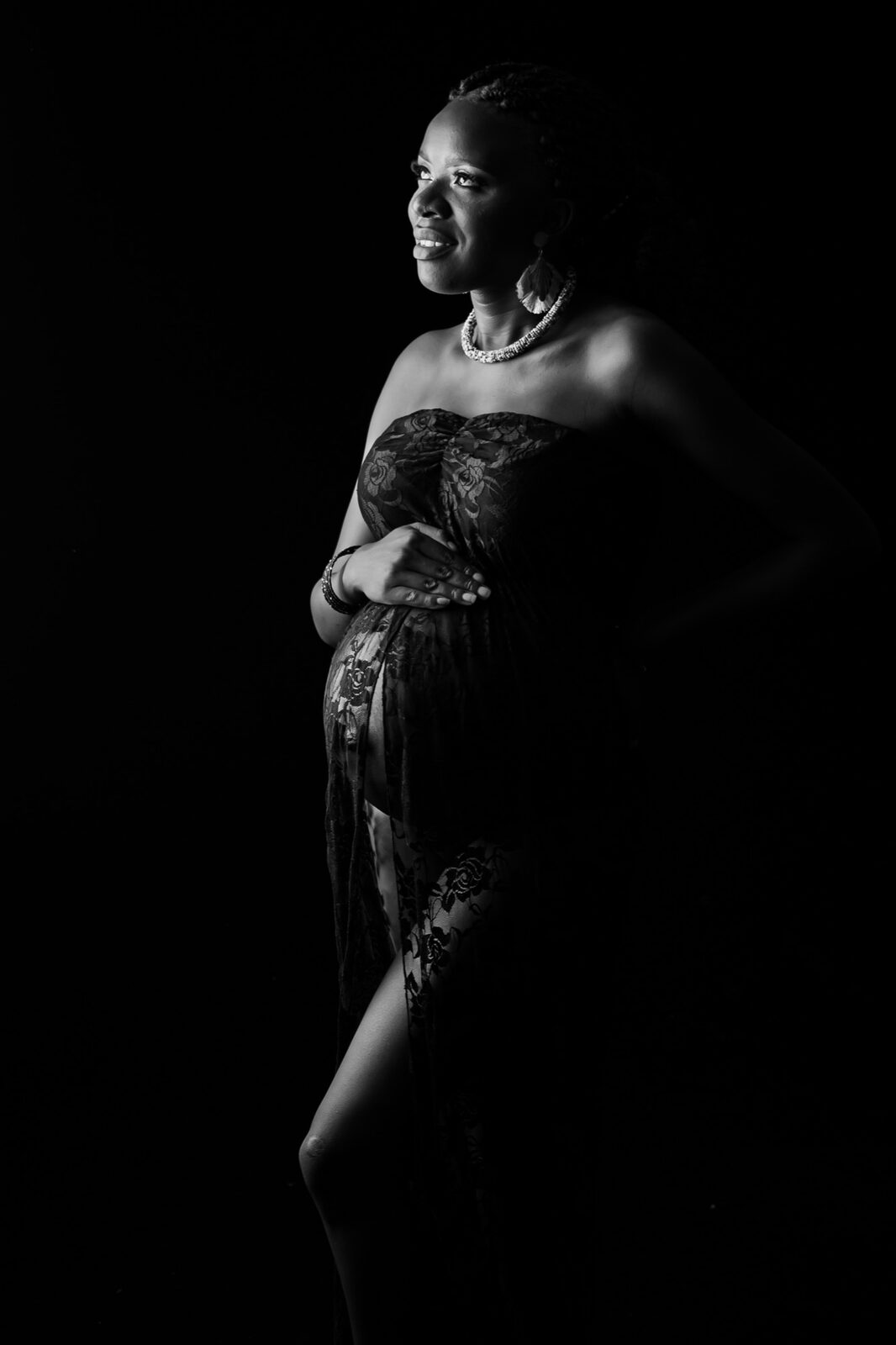
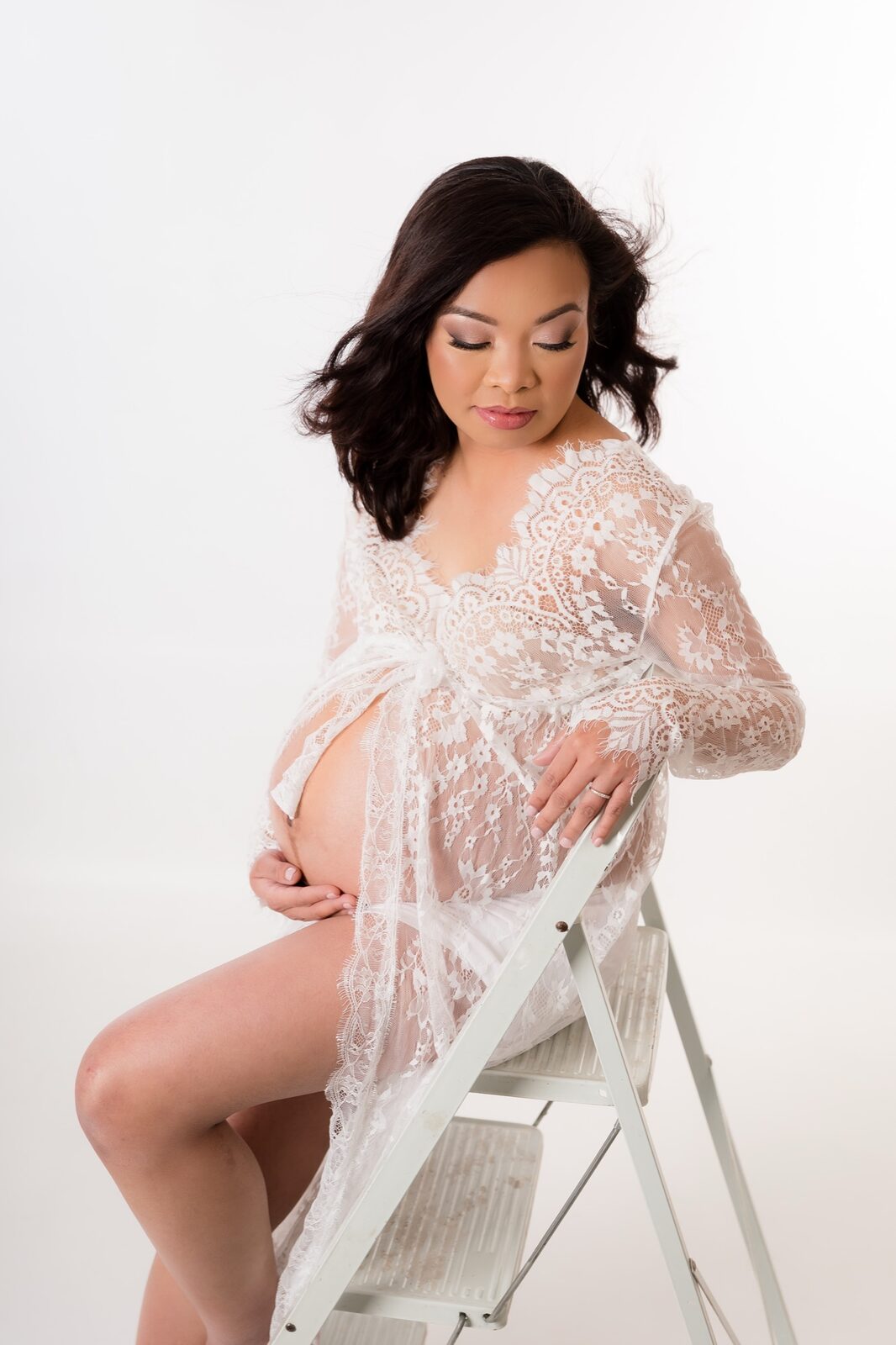
Our studios in Glen Alpine and Gledswood Hills are purpose-built for portrait work. Professional studio lighting — typically a combination of backlight and side-key light — wraps around the bump rather than flattening it. That's how you achieve the signature silhouette-and-glow that makes maternity portraits so immediately striking.
Climate control is a practical priority, not a luxury. Sessions involve standing, sitting, close-up detail shots, and partner poses — all of which are far more achievable in a comfortable, temperature-controlled environment. A comfortable body produces a relaxed face, and a relaxed face photographs beautifully every time.
Guided Posing That Actually Flatters
This is where professional photography separates most clearly from DIY attempts. Posing guidance is an active, ongoing conversation throughout your session. Your photographer coaches subtle adjustments — weight distribution, hand placement, shoulder angle — all of which translate dramatically on camera.
Common techniques include rising gently onto the toes to lengthen the torso, placing the leg nearest the camera forward for a flattering angle, and keeping hands soft and relaxed. Tension in the hands reads immediately in photographs; ease is everything.
"The best maternity portraits aren't about achieving a perfect body — they're about capturing the full, extraordinary weight of who you are in this exact, fleeting moment. That's what professional lighting and guidance make possible."
Wardrobe and Styling: What to Wear on the Day
What you wear has a significant impact on the final images — but you don't need to solve this on your own. Our studio carries a curated range of maternity gowns and wraps, so you have genuine options without the stress of sourcing and transporting outfits. Most clients bring one or two personal pieces and complement them with studio wardrobe.
General guidance for what works well under studio conditions:
- Flowing gowns in neutral or jewel tones drape elegantly and photograph beautifully under controlled light.
- Fitted wraps and body-hugging fabrics emphasise the bump's shape and work brilliantly for close-up detail shots.
- Avoid busy patterns — they compete with your face and the bump for the viewer's attention.
- Soft, muted palettes — blush, ivory, slate, sage — tend to translate well across a wide range of skin tones.
- Bring something personal if it matters to you: a meaningful piece of jewellery, a special wrap, baby's first outfit. These details add emotional depth to the images.
For further styling inspiration, our guide on maternity portrait session ideas goes into considerable depth on wardrobe, colour palettes, and props.
Including Your Partner, Toddler, or Older Children
Maternity sessions don't have to be solo affairs. Some of the most emotionally resonant bump portraits feature a partner's hands cradling the belly, a toddler pressing their ear to mum's tummy, or an older sibling peering wide-eyed at the bump. These layered images tell a richer story — the whole family poised on the edge of change.
A few practical tips if you're planning to include family members:
- Let little ones explore the studio freely for the first few minutes — children warm up to new environments at their own pace.
- Bring a familiar toy or snack to keep toddlers settled between shots.
- Coordinate colours rather than matching outfits — complementary tones photograph more naturally than identical looks.
- Let us know in advance so we can allow enough time in the session for everyone to feel relaxed and comfortable.
Many families follow their maternity session with a newborn photography session in Sydney within the first fortnight of birth — creating a beautiful visual arc from bump to baby that becomes one of the most treasured sequences in any family album.
Ready to Capture Your Bump Story?
Faithful Photography's studios in South-West Sydney are purpose-built for maternity sessions — professional lighting, expert styling, and a genuinely unhurried experience from go to whoa.
How to Prepare: A Step-by-Step Pre-Session Checklist
A little preparation makes a genuine difference to how relaxed and confident you'll feel on the day. Here's a straightforward order of operations to set yourself up for a smooth session:
- Book early. Secure your preferred date well before 36 weeks — popular weekend sessions fill quickly, particularly through spring and early summer.
- Hydrate in the days leading up. Well-hydrated skin photographs more luminously and evenly. Aim for consistent water intake in the 48 hours before your session.
- Arrive with clean, dry hair. Skip heavy styling products — your hair and makeup artist will build from a clean base for best results.
- Rest where possible beforehand. Fatigue shows in photographs; a relaxed, rested face is genuinely your best asset on the day.
- Wear loose, comfortable clothing on the way. Tight waistbands and bra straps leave marks that take time to fade — loose layers are your friend.
- Eat a light meal beforehand. You'll be standing and posing for 30–60 minutes; arriving on an empty stomach isn't comfortable.
- Gather any meaningful props or personal items you'd like incorporated — an ultrasound image, a piece of jewellery, baby's first outfit, or anything with personal significance.
If you have any questions in the lead-up to your booking, our team is always happy to talk through specifics. We'd rather you arrive feeling fully prepared than spend any mental energy second-guessing details on the day.
From Your Gallery to Your Gallery Wall
The edited, high-resolution images you receive at the end of your session aren't intended to live in a downloads folder. They're designed to be printed, framed, and lived with — in the spaces where your family actually gathers.
A few ways families across the Macarthur region choose to display their maternity portraits:
- Nursery statement print: A single large-format portrait above the cot creates an immediate, deeply meaningful focal point in the room.
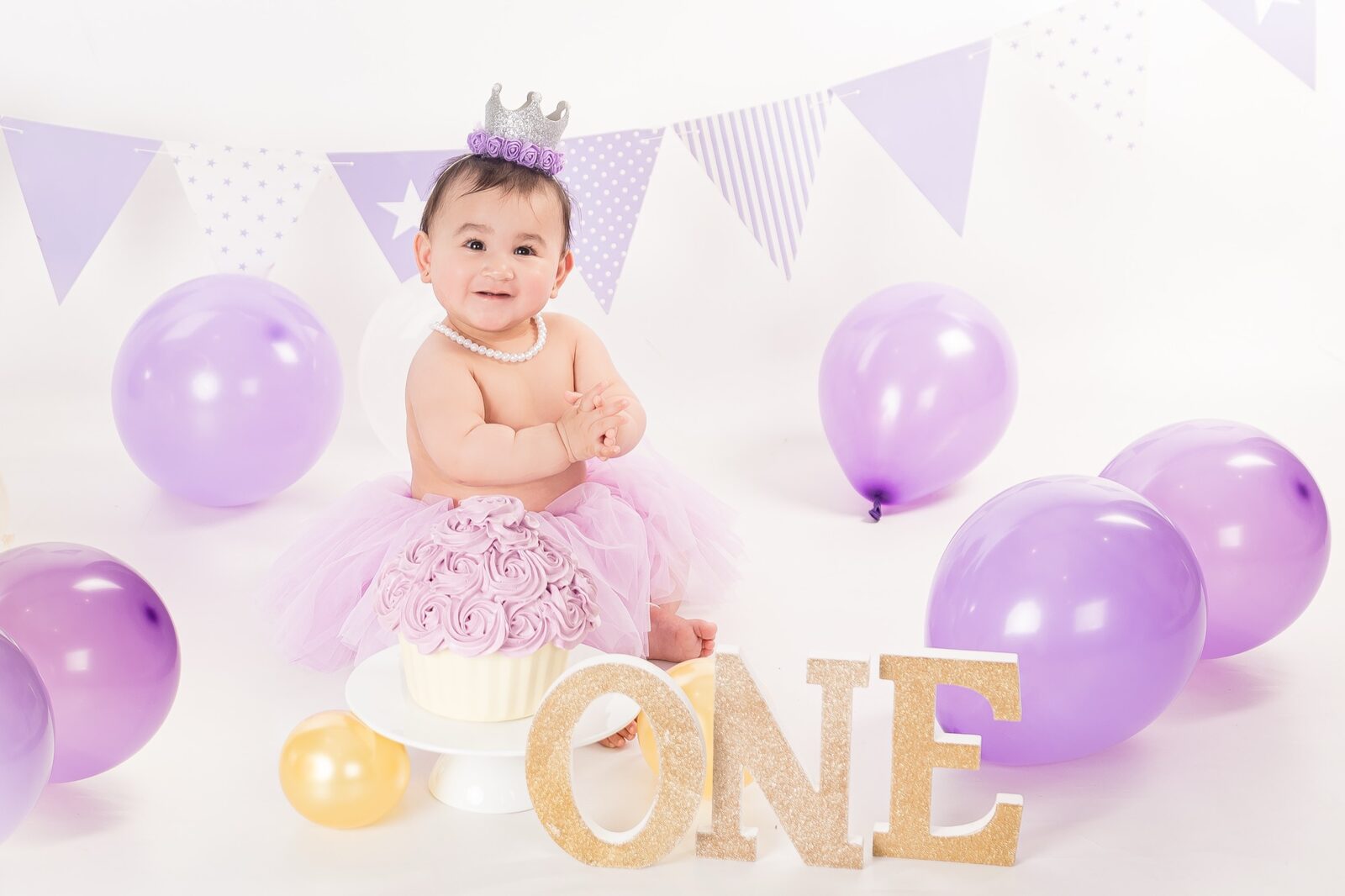
- Hallway gallery wall: A curated sequence — bump portraits, newborn session, first birthday cake smash — tells the full story of your family's first chapter in one continuous visual arc.
- Heirloom album: A physical album sits on the coffee table, gets pulled out at family gatherings, and outlasts every digital format.
- Gifts for grandparents: Framed portraits are genuinely treasured gifts — far more meaningful than anything from a shop. Our gift vouchers are also a popular option if you'd like to share the session experience itself.
Faithful Photography offers professional printing and product options — your photographer will walk you through choices as part of the post-session process, with no pressure and no hard sell.
Frequently Asked Questions
When is the best time to book a maternity studio session in Sydney?
We recommend booking between 28 and 34 weeks for most sessions. Around 34 weeks offers the ideal combination of a full, photogenic bump and enough comfort to move freely through a variety of poses. It's also worth locking in your date early in your second trimester — popular weekend slots can fill several weeks in advance, particularly through spring.
Does the studio provide gowns and styling props?
Yes. Our studios carry a curated selection of maternity gowns, wraps, and styling accessories — you're welcome to use our wardrobe, bring your own outfits, or combine both. Most clients do a mix of studio pieces and one or two personal garments that hold special meaning. Your photographer will help you decide on the best combination for your session on the day.
Is professional hair and makeup included?
Professional hair and makeup are available as an add-on and are strongly recommended for all studio sessions. Studio lighting is technically demanding — it reveals texture and washes out colour in ways that require professional preparation to manage. Our dedicated hair and makeup artists work specifically with photography lighting, which produces a noticeably different result from standard makeup application.
Can my partner or children join the maternity session?
Absolutely — and we encourage it. Partner shots and sibling moments produce some of the most emotionally resonant images from any maternity session. Please let us know in advance that you'd like to include family members so we can plan session timing accordingly and allow plenty of space for everyone to settle into the studio environment comfortably.
Where are Faithful Photography's studios located?
We operate two purpose-built studio locations: Glen Alpine and Gledswood Hills, both in Sydney's South-West. We serve the wider Macarthur region including Campbelltown, Camden, Narellan, and surrounding areas. Clients travel to us from across South-West Sydney — and occasionally from further afield — for maternity, newborn, family, and cake smash sessions.
How long does a maternity studio session typically take?
Most maternity sessions run between 60 and 90 minutes from arrival to wrap — allowing time for hair and makeup, wardrobe changes, solo portraits, partner shots, and close-up detail images. The pace is relaxed and client-led; we never rush through poses or skip meaningful moments to hit a hard finish time. You're welcome to sit, rest, and take things at whatever pace feels comfortable.
Visit Faithful Photography Today
Your bump deserves more than a phone snap. Faithful Photography's studios in Glen Alpine and Gledswood Hills are purpose-built for maternity portrait sessions — professional lighting, expert styling, and a genuinely unhurried experience in the heart of South-West Sydney. We'd love to be part of your story before it changes forever.