Key Takeaways
- Rainbow cake photos stop the scroll because the human eye processes vivid colour contrast faster than any other visual cue — but light, angle and a neutral backdrop are what separate a forgettable snap from a frame-worthy image.
- For cake smash sessions, the rainbow cake's layered structure gives photographers a natural story arc — from pristine centrepiece to gloriously frosting-covered little one — across dozens of unique frames.
- Professional studio lighting, a considered colour palette and an experienced photographer transform a simple bake into a gallery-ready moment your family will treasure for decades.
Why Rainbow Cake Photos Stop the Scroll
The Science Behind Colour Contrast
The sudden flood of rainbow cake photos across social feeds isn't coincidence — it's colour psychology with a social media megaphone. The human eye processes colour contrast faster than any other visual cue. When a scroll-hardened thumb glides past a grid of beige lattes and neutral flatlay shots, a cake with crisp bands of red, orange, yellow, green, blue and violet reads as intentional, festive and loud. That visual loudness signals — without a single word of caption — "pay attention to this." Engagement follows naturally.Why a White Exterior Works So Hard
One of the most counterintuitive truths about rainbow cake photography is this: the outside of the cake matters as much as the inside. A bright white buttercream or cream cheese frosting doesn't compete with the internal colour story — it frames it. Coloured frostings, however pretty they look in person, often muddy the contrast in photographs. The viewer's eye gets pulled in two directions at once. A clean white exterior acts like a gallery wall: it centres attention on the reveal, every single time.- White or ivory buttercream maximises colour contrast when the cake is sliced
- Pastel frostings can work but require careful white-balance correction in editing
- Heavily coloured ganache or chocolate coatings typically obscure the layered story
- Naked cake styles (no exterior frosting) showcase layers but need immaculate baking precision to photograph well
How to Light a Rainbow Cake for Maximum Colour Impact
Natural Light: Still the Gold Standard
Natural window light beats artificial strobes for rainbow cake photography in almost every home setting. It's softer, more forgiving, and keeps colours honest rather than pushing them into oversaturated, unnatural territory. Position the cake perpendicular to a large window so the light skims across the frosting surface, teasing out texture without washing out the hues. Avoid direct midday sun — that's the fast track to blown highlights and strange colour shifts on your violet and red layers. Early morning or late afternoon light, when the sun sits low, adds warmth and makes those bands pop with a natural vibrancy no filter can fully replicate.When You Don't Have the Perfect Window
No ideal natural light source? No drama. A few simple tools make an enormous difference:- Diffuse harsh light with a white sheet or a large piece of white card held just out of frame
- A cheap reflector (silver or white) bounced opposite the light source fills shadows without adding colour cast
- Ring lights are popular but can flatten texture — use them at an angle rather than straight-on
- Avoid mixing warm incandescent globes with cool natural light; the colour conflict will ruin your whites
"The difference between a meh rainbow cake photo and a frame-worthy one almost always comes down to light direction — position it to skim the frosting, not blast it head-on, and the colours practically photograph themselves."---
Composition Angles That Reveal the Full Story
Three Angles, One Cake, Infinite Possibilities
One of the things that makes rainbow cakes the Swiss Army knife of dessert photography is their compositional flexibility. Unlike a monochrome cake that relies on a single perfect angle to be interesting, a rainbow cake genuinely performs from multiple perspectives.- Overhead (flat lay): Delivers the full colour spectrum in one satisfying hit. Perfect for evenly stacked, symmetrical builds.
- 45-degree hero angle: Shows height, separation between layers and a sense of depth. This is the angle that makes people want to reach through the screen.
- Slice shot (cross-section): Warm the knife, wipe it clean between cuts, and slice with confidence. A clean cross-section is proof — proof of the layers, the precision, the craftsmanship. It's the money shot.
Backdrop and Prop Choices
Keep backgrounds neutral and the cake becomes the undisputed star. White marble, soft grey linen, bare light timber boards — these all force the eye toward the colour and away from visual clutter. Avoid busy patterns, dark surfaces (which can alter how the camera reads the cake's colours) and overly styled props that compete for attention. A single linen napkin, a small bunch of fresh flowers or a simple cake stand is almost always enough. ---Rainbow Cake Smash Sessions: Photographic Gold for First Birthdays
Why the Rainbow Format Works So Well for Cake Smashes
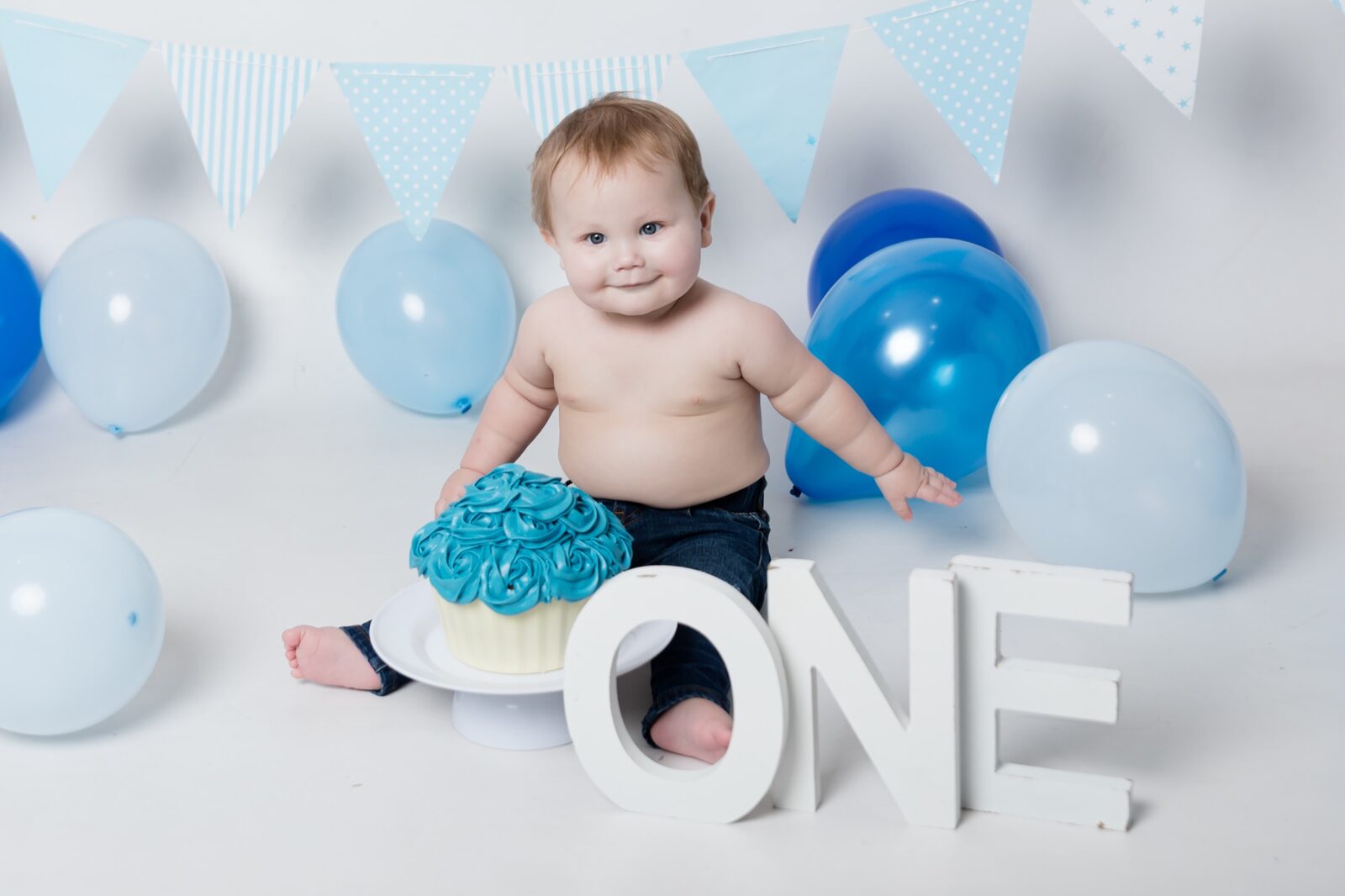
At our studios serving families across the Macarthur region — from Campbelltown and Camden through to Narellan and beyond — cake smash sessions featuring rainbow cakes are among our most requested and most spectacular. The reason is structural. A rainbow cake offers a natural story arc across an entire session. The session opens with the cake pristine and perfectly lit. As your little one discovers the frosting, the colour, and the sheer edible joy of the whole occasion, those vivid layers become part of the frame rather than just a prop. Frosting finds faces. Layers collapse in gloriously photogenic ways. And because the colours are so vivid and varied, even the messiest cake smash moment still reads as visually dynamic rather than just chaotic.What Makes a Great Cake Smash Session
There's more to a memorable session than simply turning a baby loose on a cake. At Faithful Photography, we consider every element of the setup in advance. Our blog on cake smash studio setup and design walks through exactly how we create those sweetly memorable backdrops — and the rainbow cake always sits at the centre of it. Styling choices matter enormously too. Our guide to cake smash outfit ideas explains how to choose colours and textures that complement (rather than clash with) a rainbow cake's vivid palette — a detail that makes a genuine difference to the final images.Ready to Book Your Rainbow Cake Smash Session?
Our Glen Alpine and Gledswood Hills studios are designed to bring out every colour, every laugh and every messy, magical moment — with professional lighting, styled sets and experienced photographers who love working with little ones.
Styling the Perfect Rainbow Cake for Photography
Baking Tips That Translate to Better Photos
The best rainbow cake photo sessions start in the kitchen — or at least with a thoughtful conversation with your baker. A few non-negotiable principles apply whether you're baking at home or ordering from a local bakery:- Use gel food colouring, not liquid. Gel produces vivid, saturated bands. Liquid colouring dilutes the batter and results in dull, washed-out hues that barely register on camera.
- Bake equal-depth layers. Uneven layers look accidental rather than architectural. Weigh your batter portions for consistency.
- Cool completely before frosting. Rushing this step causes the buttercream to slide, the layers to compress and the cross-section shot to collapse.
- Chill the finished cake before the session. A cold cake holds its shape far better under studio lights — and during the enthusiastic attention of a one-year-old.
- Keep the exterior simple and smooth. A well-executed white crumb-coat followed by a clean final layer is far more photogenic than elaborate piping that distracts from the interior reveal.
Props, Surfaces and Accessories
Less truly is more when styling a rainbow cake for a professional shoot. The cake's colour story is already doing enormous visual work — your job is to support it, not compete with it. Our photographers at Faithful Photography's Gledswood Hills studio and Glen Alpine studio work with a curated collection of backdrops, surfaces and props specifically chosen to complement vibrant, colourful subjects. A session consultation before your booking means the entire setup is considered in advance — nothing left to chance on the day. ---From Home Bake to Gallery Wall: Printing Your Rainbow Cake Moments
Why Print Still Wins
Digital files have their place — they're easy to share, endlessly reproducible and immediately satisfying. But the most visually striking rainbow cake photos deserve more than a phone screen. Large-format prints, canvas wraps and photo books transform a great image into a permanent part of your home. The depth of colour in a professionally captured and professionally printed rainbow cake image is simply not replicable on screen. Pigment-based fine art prints in particular render those crimson, cobalt and violet layers with a richness that makes the image feel almost three-dimensional.Building a Wall Gallery Around a Cake Smash Session
Many families who book a cake smash with us return to expand their collection with a family photoshoot in Sydney in the months that follow. The cake smash becomes the anchor image — vivid, joyful, immediately recognisable — while the family portraits provide balance and context around it. It's a combination that looks genuinely spectacular in a hallway gallery or living room wall arrangement. Our team is happy to advise on sizes, layouts and framing at your viewing and ordering session after the shoot. ---Frequently Asked Questions
What makes rainbow cake photos so popular right now?
The visual contrast of vivid, clearly defined colour bands against a white exterior is one of the most effective scroll-stopping combinations in food and lifestyle photography. The human eye processes colour contrast faster than text, faces or almost any other visual element — so rainbow cakes genuinely perform better in social feeds than their single-tone counterparts. Combine that with the emotional associations of celebration, childhood and festivity, and you have an image type that's almost universally engaging.
Do I need to supply the cake for a cake smash session at Faithful Photography?
Yes — most families either bake their own cake or order from a local bakery. We're happy to advise on what works best photographically in terms of size, frosting colour and number of layers. For rainbow cake smash sessions in particular, we recommend a minimum of four to six distinct colour bands, gel food colouring for vibrancy, and a clean white exterior buttercream. We're always glad to chat through the details during your pre-session consultation.
What's the best angle for photographing a rainbow cake at home?
For an uncut cake, a slight 45-degree angle from the front shows height and shape better than a flat-on shot. For the cross-section reveal — which is genuinely the most impactful rainbow cake photo you can take — shoot straight on at cake-height so the layers read horizontally across the frame. Warm your knife and wipe it between every cut for a clean, dramatic slice. Good side light from a window positioned to one side of the cake will bring out both texture and colour saturation.
Where are Faithful Photography's studios located?
We operate professional photography studios in Glen Alpine and Gledswood Hills, in Sydney's South-West. We regularly work with families from across the Macarthur region, including Campbelltown, Camden, Narellan, Harrington Park, Gregory Hills, Mount Annan and Oran Park — as well as families from Liverpool, NSW and surrounding areas who travel to us for studio sessions.
Can I use rainbow cake photos from a smash session on social media?
Absolutely — and we encourage it. Your digital files are yours to share freely. We do ask that you credit Faithful Photography when sharing our images publicly, and we love being tagged so we can share your little one's magical moment with our community too. If you'd prefer your images remain private, simply let us know and we'll never share them without your explicit permission.
How do I find out about session pricing and packages?
Full details on our packages — including cake smash sessions, family portraits, newborn and maternity shoots — are available on our session pricing page. You're also welcome to contact us directly if you'd like to talk through options before committing. We offer gift vouchers for cake smash and other sessions, which make a wonderful first birthday or baby shower gift from grandparents, aunties and uncles.
Visit Faithful Photography Today
Whether you're planning a rainbow cake smash, a family milestone portrait or a maternity session, our studios in Glen Alpine and Gledswood Hills are ready to create images that genuinely stop the scroll — and stand the test of time on your walls. Reach out to start planning your session with our team.