Key Takeaways
- The safest and most flattering baby photography poses prioritise comfort first — a settled, warm baby always photographs better than a posed but unhappy one.
- Different poses suit different developmental stages; what works for a ten-day-old newborn is very different from what suits a curious six-month-old.
- A skilled photographer reads your baby's cues in real time and adapts — no forced smiles, no rushed transitions, just genuine moments captured beautifully.
Why Posing Guidance Matters More Than You Think
There's a common misconception that great baby photography is mostly about luck — catching the right expression at the right moment. In reality, skilled posing creates the *conditions* for those moments to happen naturally. When a baby is positioned comfortably, safely and with good lighting in mind, authentic expressions follow almost on their own. Posing also protects your baby. Every position we use at Faithful Photography is designed with newborn safety as the non-negotiable starting point. Composite techniques, spotter support and careful prop handling are standard practice — never an afterthought.The role of the photographer versus the parents
Your job during a session is simple: be present and responsive to your baby. Our photographers handle the technical direction — angles, lighting adjustments, timing between transitions. The more relaxed you are, the more relaxed your baby will be. Babies are extraordinarily sensitive to parental tension, and that sensitivity shows up in every frame. ---Classic Newborn Poses That Consistently Deliver
The first two weeks of a baby's life offer a brief, irreplaceable window. During this period, newborns sleep deeply, curl naturally, and tolerate gentle repositioning far better than they will in another month's time. These classic poses are the foundation of most newborn sessions.The swaddle pose
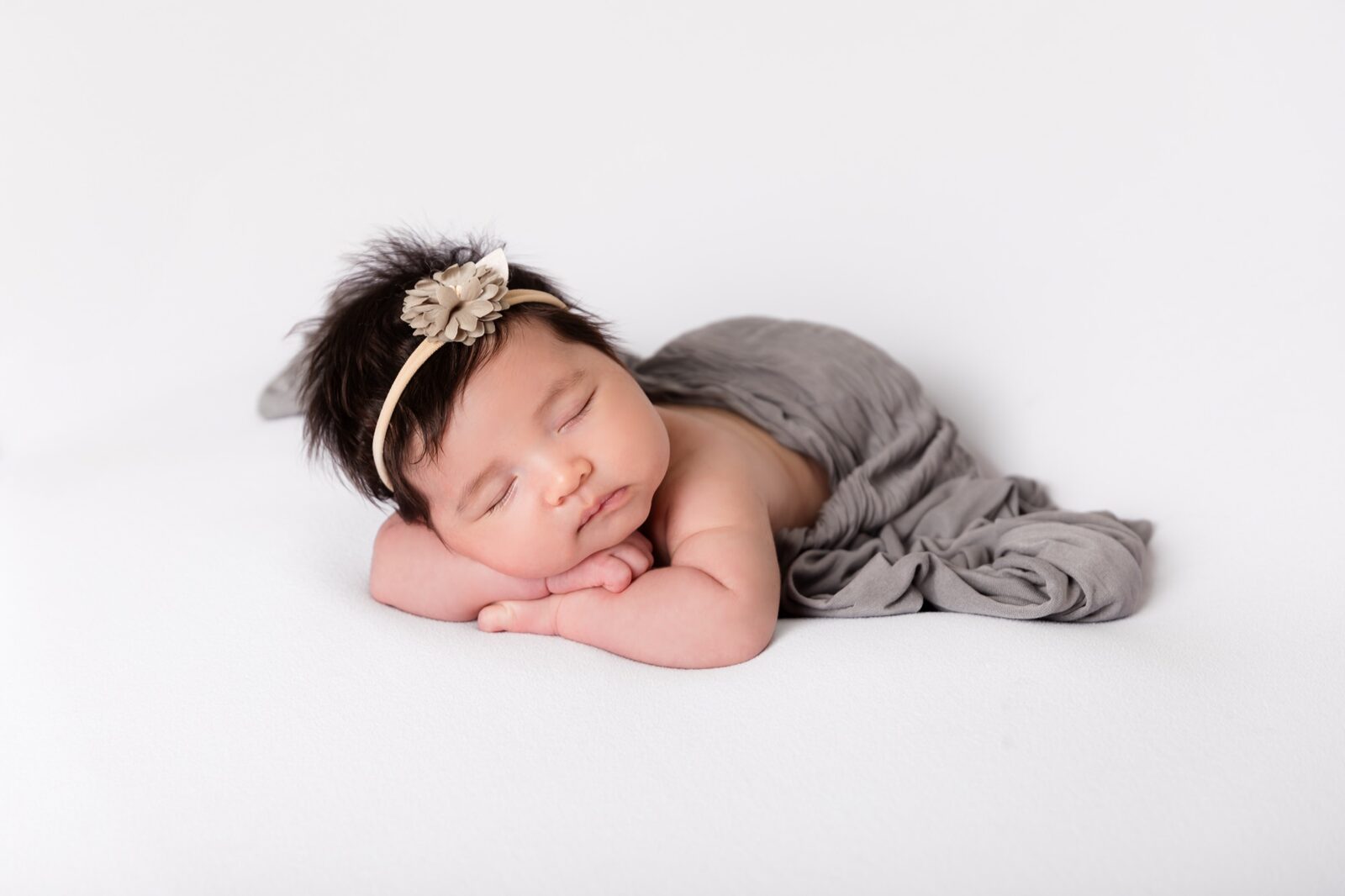
The swaddle is arguably the most universally flattering position for a newborn. Wrapping a baby snugly in soft, breathable fabric recreates the physical security of the womb — the nervous system settles, the eyes soften, and those tiny micro-expressions that make a photograph sing become far more accessible. A few practical details our photographers pay close attention to:- Room temperature: kept around 26–27°C, because newborns lose body heat quickly and a cold baby is an unsettled baby.
- Wrap tension: firm enough to feel secure, but the chest must visibly rise and fall with every breath.
- Timing: days 5–14 represent the sweet spot for deep, predictable sleep.
- Hand placement: tucking tiny hands near the cheeks draws the eye to delicate facial features without obscuring them.
The parent's embrace position
This is often the pose parents underestimate right up until they see the final image. Your heartbeat, your scent, the familiar rhythm of your breathing — these things calm a newborn faster than any prop or studio trick. Head resting on a shoulder, tucked into the crook of an arm, chest to chest: whatever feels natural to you will read as authentic on camera. The result is connection rather than choreography. That distinction is everything when it comes to turning a photograph into a memory.The tummy time setup
This position suits slightly older newborns — roughly three to six weeks — who are beginning to lift their heads with some consistency. Baby lies on their tummy, hands tucked underneath to create that curious, peek-a-boo expression that parents adore. Our photographers always have a spotter present for neck support, and babies are never left unattended on an elevated surface. Camera angle matters enormously here: an overhead shot flattens the image, while a 45-degree tilt introduces depth, personality and far better eye contact. ---"One rule trumps composition, lighting and lens choice every single time: comfort and safety come before the shot. A baby who is warm, fed and settled will give you ten genuine expressions in a row. A baby who is pushed past their limits gives you none."---
Poses That Showcase Personality and Growth
Around four to six months, the sleepy-newborn haze lifts noticeably. Babies become social, curious, interactive — and suddenly every session becomes a personality showcase. The poses that worked beautifully at ten days now need to evolve to match what your baby is *doing* developmentally.The supported sitting position
Once neck control is solid — something our photographers assess in the first few minutes of a session — sitting poses become incredibly versatile. Baby is seated on their bottom, legs stretched or casually crossed, hands relaxed on the surface in front of them.- A safe, interesting prop gives curious hands something to explore (and keeps attention forward).
- Let the baby direct the energy — the reaching, the touching, the wide-eyed reactions are the best candid moments in the session.
- Our photographers adapt the pose to your baby's actual development, not their calendar age.
The floor play pose
The floor is underrated. A soft blanket or textured play mat provides security, and a low camera angle captures the world from your baby's perspective — which gives the final image warmth and context, not just cuteness. Studio lighting earns its keep during floor play in particular, because babies at this stage *accelerate* — they wiggle, pivot and roll with no warning. Having predictable, gorgeous light on demand means our photographers can chase those spontaneous moments without losing exposure or colour quality. ---Ready to capture these moments?
Our Glen Alpine and Gledswood Hills studios are purpose-built for newborn, baby and family sessions across the Macarthur region — warm, welcoming spaces where your baby sets the pace.
The Baby in Parent's Arms — Growing Into Connection
As babies grow through the four-to-six-month window and beyond, parent arms shift from being a cradle to being a *stage*. You're now holding an alert, social creature who wants to be part of the conversation — and that energy is photogenic in a completely different way.Keeping attention forward
Sitting or kneeling with your baby facing the camera on your lap, or tucked to your chest with their face visible, creates images that show both connection *and* personality. Babies at this stage respond to voices, movement and eye contact. Our photographers know exactly how to use all three.Candid interaction shots
Some of the strongest images from these sessions aren't posed at all — they're captured in the thirty seconds between poses. A laugh caught mid-nuzzle, a tiny hand gripping a finger, a baby turning to search for a familiar face. These in-between moments are what parents frame and keep for decades. ---Choosing the Right Session for Your Baby's Stage
Not all sessions are created equal, and timing genuinely matters. Here's a practical guide to matching session type to developmental stage:- Days 5–14: Ideal for the classic newborn curled and swaddle poses. Deep sleep, natural flexibility, and minimal distraction make this the prime window for our newborn photography sessions.
- 3–6 weeks: Tummy time and parent-embrace positions become viable as brief wakeful periods lengthen.
- 4–6 months: Sitting with support, floor play, and interactive parent-and-baby poses are all excellent choices as personality emerges strongly.
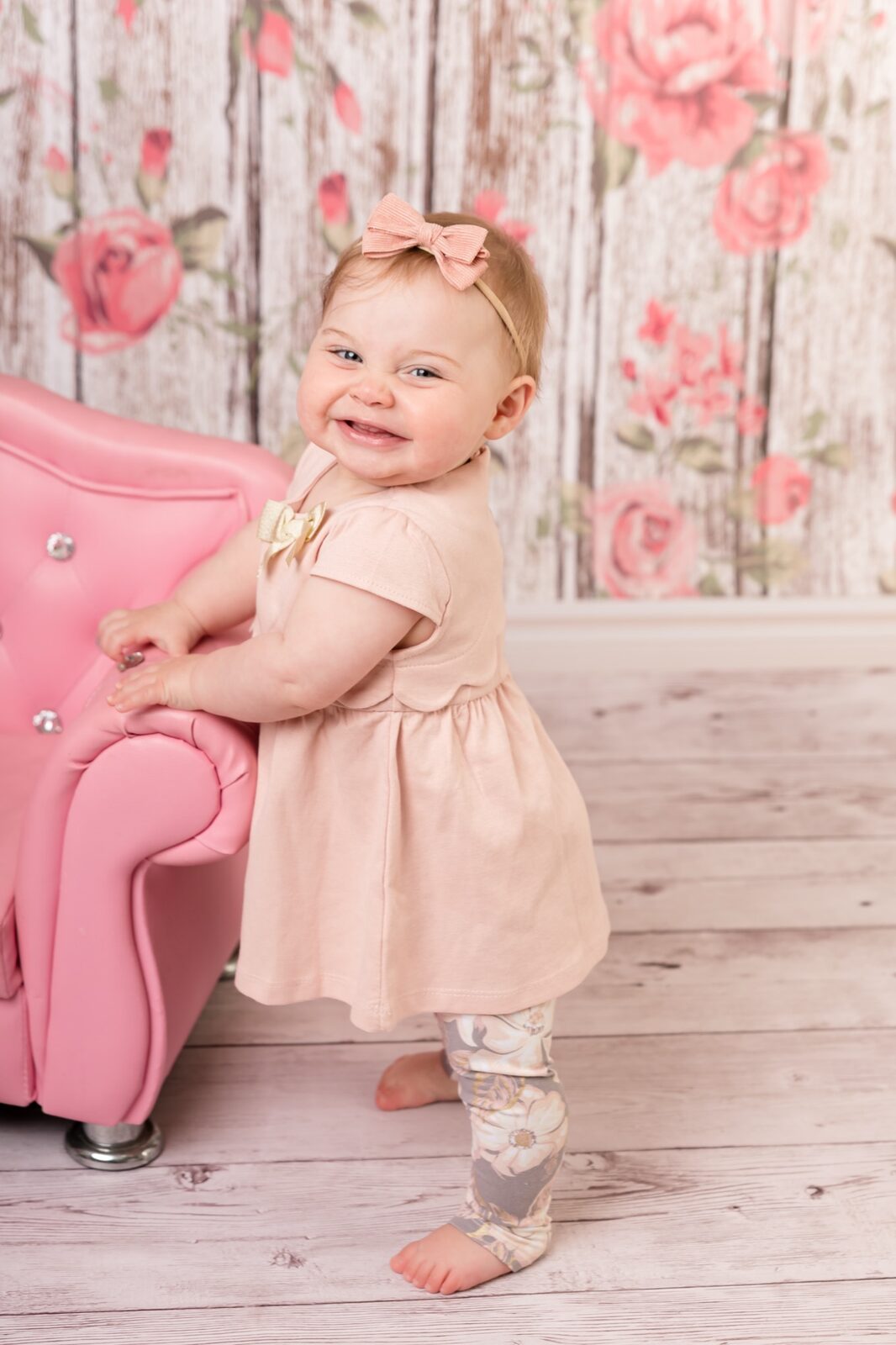
- 6–12 months: Standing with support, crawling sequences and milestone poses capture major developmental achievements beautifully.
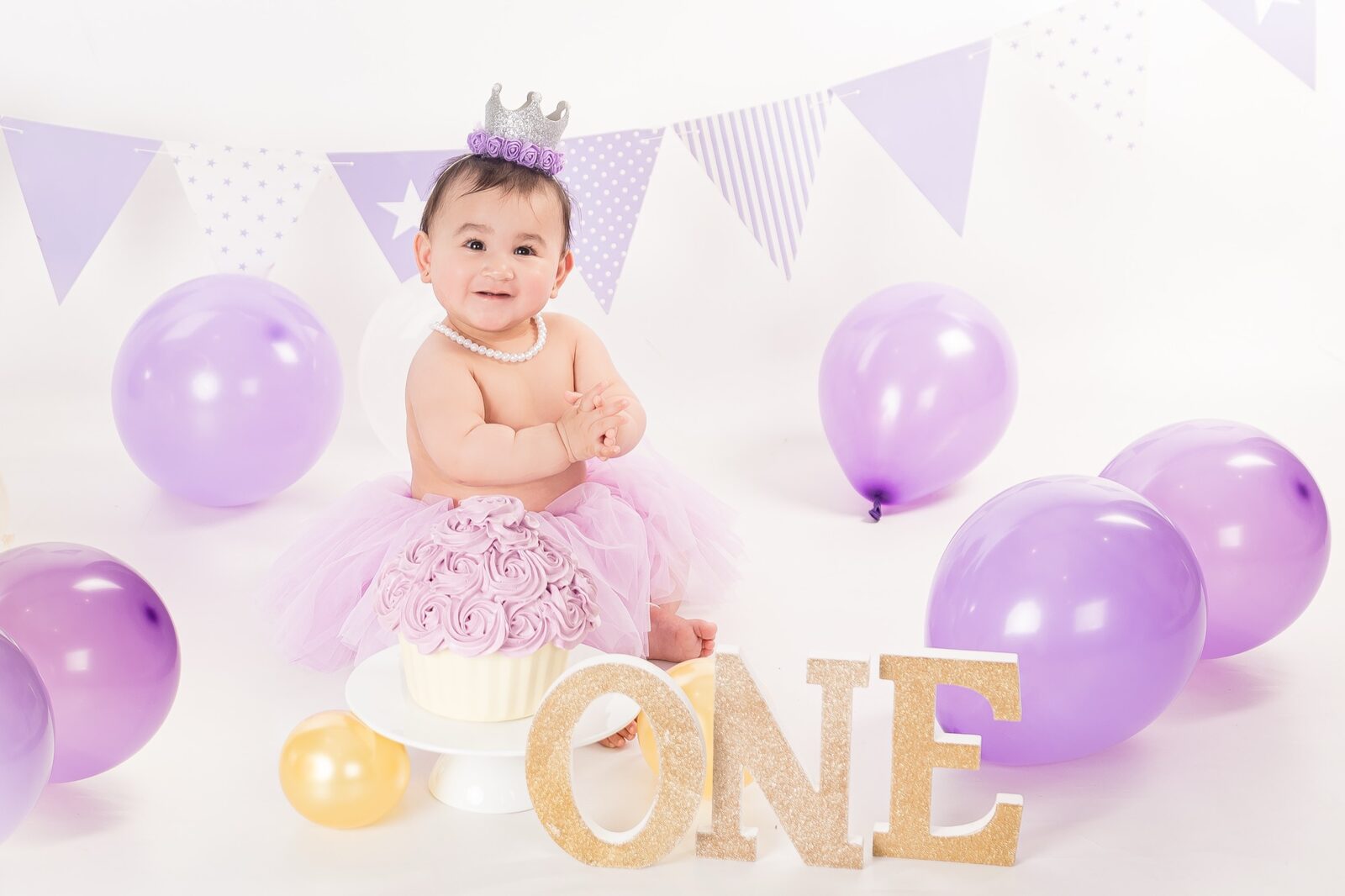
- 12 months: This is the perfect moment for a cake smash photography session in Sydney — full personality, excellent motor control, and an irresistible mess.
Location and Studio Setup — Why It Matters for Poses
The physical environment shapes what's possible during a session. Our Gledswood Hills studio and Glen Alpine studio are both climate-controlled and specifically equipped for newborn and baby work — heated posing areas, specialised beanbags, textured wraps, and a curated prop collection that's cleaned and sanitised between every session. Families travelling from Campbelltown, Camden, Narellan and broader South-West Sydney, NSW appreciate that both studios are straightforward to reach — no long drives with a newborn, no complicated parking, no stress before the session even begins.What to bring (and what not to worry about)
- A freshly fed, recently changed baby — this single factor influences session quality more than anything else.
- A spare change of clothes for you and baby (things happen).
- Any meaningful props or heirlooms you'd like incorporated.
- Your own comfort: a session runs at your baby's pace, so come prepared to settle in.
How Our Photographers Read Baby Cues During a Session
Experienced newborn and baby photographers are, in many ways, behavioural readers first and camera operators second. The technical skills matter enormously — but they're deployed *in service* of reading the room correctly. Signs we watch for and respond to immediately:- Changes in skin colour or temperature — indicators that the environment needs adjusting.
- Lip tremors or chin quivering — early hunger or discomfort cues, well before full crying.
- Startling or arching — a signal to pause, resettle, and not push through to the next pose.
- Eye contact and tracking — positive engagement cues that tell us the baby is ready and receptive.
Frequently Asked Questions
What is the best age for newborn photography poses in Sydney?
Days 5 to 14 after birth is the optimal window for classic newborn posing. Babies sleep deeply and predictably during this period, and their natural flexibility makes gentle curled positions comfortable and safe. Beyond three weeks, sessions adapt to use more awake-time and parent-embrace poses rather than deep sleep setups.
Are newborn poses safe? How do you keep babies secure?
Safety is the starting point for every single pose we use. All composite-style poses (where it looks as though a baby is holding their own head up unsupported) are photographed with a spotter present and composited in post-production — the baby is never actually unsupported. Our studio is heated to the appropriate temperature for newborns, and sessions pause immediately if a baby shows any sign of distress.
My baby hates being put down — can we still get good shots?
Absolutely. The parent's embrace and in-arms poses are some of the most emotionally powerful images we capture, and they work beautifully for contact-sensitive babies. Many families are surprised to find that the images where a parent is visibly present — not just hands — end up being their absolute favourites from the session.
How long does a baby photography session take?
Newborn sessions are typically two to three hours, because we work entirely at the baby's pace — feeds, nappy changes and settling time are built in, not rushed through. Milestone sessions for older babies (four months and beyond) tend to run a little shorter, around sixty to ninety minutes, as babies at that stage have longer alert windows and transitions between poses are faster.
Do you serve areas outside Campbelltown and Camden?
Yes — our studios in Glen Alpine and Gledswood Hills are accessible to families across the broader Macarthur region and South-West Sydney. We regularly work with families from Narellan, Gregory Hills, Mount Annan, Harrington Park, Oran Park, Liverpool NSW, and beyond. If you'd like to confirm whether your suburb is close to us, feel free to get in touch before booking.
Can siblings or extended family be included in the session?
Yes — sibling shots are a beautiful addition to newborn sessions and are something we actively encourage. We also offer extended family sessions if grandparents or other family members want to be part of the experience. Just let us know at booking so we can allow the appropriate time.
Visit Faithful Photography Today
Our Glen Alpine and Gledswood Hills studios are ready to welcome your family — warm, unhurried sessions where your baby's comfort always comes first, and the images last a lifetime. Serving the Macarthur region and South-West Sydney, NSW.