Key Takeaways
- A bright, well-organised photography studio depends on two non-negotiables: consistent natural light and a layout that keeps sessions flowing without friction.
- North-facing windows are the gold standard for Sydney studios — diffused, flattering, and reliable all day, with none of the drama of direct sun.
- Simple tools — reflectors, diffusers, dedicated zones — transform even a compact space into a versatile, professional environment that clients genuinely enjoy.
Walk into a photography studio that genuinely works and you'll feel it immediately — the light sits softly on every surface, the space breathes, and nothing trips over anything else. Walk into one that doesn't, and you'll feel that too: harsh shadow pools, gear stacked three deep, and a schedule permanently running ten minutes behind. At Faithful Photography, our studios in Glen Alpine and Gledswood Hills were designed with light maximisation and spatial flow as the core brief — not as afterthoughts. Whether you're photographing newborns, families, or corporate clients across South-West Sydney, the studio environment shapes the outcome more than any single piece of gear. This guide unpacks what actually matters — practically and without fluff.
Why Light and Space Are the Twin Currencies of Any Great Studio
Every photography studio in Sydney faces the same core challenge: how do you deliver consistent, flattering results across wildly different session types — newborns, families, corporate headshots, cake smashes — without rebuilding the room each time? The answer is purposeful design. When your studio is filled with good light and laid out for real workflow, the creative work becomes easier. When it isn't, even talented photographers spend half their energy managing logistics instead of connecting with clients.
Poor light setups eat time. A cramped layout limits the kinds of sessions you can offer. And once a studio starts fighting you, moods dip — yours and your clients'. The stakes are real: missed bookings, rushed sessions, and the slow erosion of creative confidence.
The Cost of Getting It Wrong
A studio that underdelivers on light or space doesn't just create technical headaches — it creates experience problems. Families feel uncomfortable. Newborn sessions drag because the light keeps shifting. Clients sense when a photographer is stressed and compensating, even if they can't articulate why. Getting the fundamentals right means everyone relaxes — and relaxed clients make for extraordinary portraits.
How Natural Light Actually Works in a Photography Studio
Natural light is the most flattering and versatile light source available — and the most consistently misunderstood. The quality of light you receive depends almost entirely on window orientation and time of day. Getting a handle on this is the single most impactful thing you can do for studio photography in Sydney, where the sun angle shifts dramatically between seasons.
North-Facing Windows: The Reliable Workhorse
In Australia, north-facing windows are the gold standard. Unlike east-facing glass that gives you a warm, glorious morning then disappears by midday, north-facing exposure is the reliable colleague who shows up at 9 am and doesn't leave until mid-afternoon. That's a full day of usable, consistent light — enough runway for back-to-back sessions without chasing shadows.
The reason north light works so beautifully is that it never hits your subject directly. It bounces off the sky and arrives diffused — soft, even, and forgiving in a way direct sun simply isn't. Pair that with high ceilings and white or pale walls (which act as free passive reflectors) and you end up with broad, even coverage that fills the frame and makes skin look genuinely lovely, not sunburnt or shadow-heavy.
One thing to watch: north light runs cool — roughly 5,500 to 6,500 Kelvin. Set your white balance to the cloudy preset or nudge warmth in post, unless a crisp editorial feel is the deliberate goal.
Managing Direct Sunlight and Hard Shadows
Direct sun is flattering to nobody. It drives hard shadows under eyes and chins, flattens features, and makes skin tones wildly unpredictable. When it barrels through a south- or west-facing window, you have three practical moves:
- Diffuse it — hang a translucent white panel or sheer curtain in front of the glass to soften quality without cutting intensity dramatically.
- Filter it — a neutral-density window film cuts intensity without shifting colour temperature, keeping your white balance stable across a long session day.
- Re-angle the subject — turn them so the light rakes across their face rather than blasting head-on. Perpendicular to the window is the sweet spot for most portrait work.
In Sydney summers — where sun angles go properly rogue — north-facing studios are a genuine oasis. South-facing spaces can become headache factories after about 10 am in December and January. If you're evaluating a studio space, compass orientation is the very first thing to check.
Reflectors, Diffusers and the Art of Light Control
Reflectors and diffusers are unglamorous but essential — the studio equivalent of mise en place. You don't need a wall of expensive modifiers to control light well; you need a handful of reliable tools and the judgement to know when to use them.
- A white 5-in-1 reflector (under AUD 30) bounces fill into shadow areas with minimal fuss. Flip to silver for stronger lift; stay on white for a natural, airy result.
- A 1-metre diffusion panel tames harsh rays and lets you dial shadow depth independently of overall intensity. Position it between window and subject — not in front of the subject — so you keep directional quality while losing the punch.
- Foam-core boards painted white are excellent flag-and-fill combinations for product and detail work. They cost almost nothing and restock at any art supplier.
The real skill isn't gear — it's judgement. Too much fill and everything looks flat. Too little and you're wrestling shadows in post for an hour. The aim is controlled contrast: enough to sculpt, not enough to distract.
A note on overcast days: chronically underrated and underbooked. Cloud cover is essentially a giant softbox — low contrast, flattering detail, beautiful skin texture. Don't treat grey Sydney mornings like lost opportunities. For a deeper look at which specific lighting tools are worth the investment, our guide on lighting equipment studio essentials covers every key piece in detail.
"The best studio light isn't the most expensive — it's the most consistent. When your light is predictable, your clients relax, your sessions run on time, and the work speaks entirely for itself."
Arranging Your Studio Space for Real Workflow
What looks stunning on Instagram rarely survives an actual shoot day. An aesthetically curated studio that ignores workflow is just a pretty obstacle course. The goal is a layout that lets gear, talent, and people move without bottlenecks — no trip hazards, no hunting for a key modifier between setups, no burning five minutes repositioning a backdrop stand that was in the wrong spot all morning.
Creating Distinct Zones for Different Session Types
Good studio layout starts with zones. Real, functional zones where portrait work, product work, and client prep don't collide into a tangle of C-stands and fraying patience.
- Portrait zone: roughly 3 × 4 metres minimum, positioned near your best natural light. Keep it clear, accessible, and reconfigurable. This is where the magic happens.
- Product and detail zone: smaller, away from windows so you control every photon artificially. Consistent, repeatable setups work best here.
- Client prep and waiting area: near the entry, separated from the shooting space by a temporary divider or curtain. Families — especially those with young children — need somewhere to settle and transition before stepping in front of the camera.
If you have multiple daylit rooms, schedule morning family portrait sessions in east-facing spaces and afternoon shoots in north-facing ones. Less chasing light, more actual photographing. Even under 50 square metres, portable foam-core dividers reconfigurate the space in minutes depending on what the day demands.
Positioning Equipment and Backdrops Intelligently
Backdrops stored on wall-mounted rollers rather than floor stands reclaim floor space instantly — and in a compact studio, that difference is not trivial. Light stands should live on wheeled bases so they move without being disassembled. Cables must run along walls, taped down with gaffer tape, never crossing walking paths.
Cable management is unglamorous and mission-critical. More studio accidents — and more wasted session time — come from poor cable routing than any other single factor. Thirty minutes done properly will pay back dividends across every shoot day that follows.
Ready to experience a studio designed around you?
Faithful Photography's studios in Glen Alpine and Gledswood Hills are built for light, space, and the unhurried environment that brings out the best in every session — from newborn portraits to milestone family shoots across the Macarthur region.
Lighting Equipment That Genuinely Earns Its Floor Space
Not all gear justifies its footprint. In a compact studio, every piece of equipment needs to earn its place — and the truth is, a handful of well-chosen tools will consistently outperform a room crowded with mediocre ones. Here's what actually delivers:
- A large octabox (90–120 cm): produces soft, wrapping light that mimics a generous window. One octabox positioned correctly handles most portrait work without needing additional fills.
- A collapsible beauty dish: lightweight, packs flat, and delivers a gently contrasty glow that works beautifully for maternity and newborn sessions alike.
- LED continuous lights: unlike strobes, continuous lights let clients see exactly what the light is doing in real time. For sessions involving young children — especially newborns — being able to adjust without repeated strobe bursts reduces anxiety on both sides of the camera considerably.
- V-flats: two large foam-core panels hinged at one edge. The most versatile light modifier in any studio, full stop. Use them as flags, reflectors, negative fill sources, or impromptu backdrop supports.
The temptation with a new studio is to fill it. Resist that instinct. Start leaner than you think you need, add only what a real problem demands, and you'll end up with a space that actually works — rather than one that merely impresses on a studio tour but exhausts you during a back-to-back Saturday.
Why Studio Design Directly Shapes the Client Experience
The quality of a bright photography studio in Sydney isn't purely a technical concern — it's a client experience concern. When families walk into a well-lit, thoughtfully organised space, they relax in a way that simply doesn't happen in cluttered, dim, or chaotic environments. And relaxed clients photograph entirely differently from tense, uncertain ones.
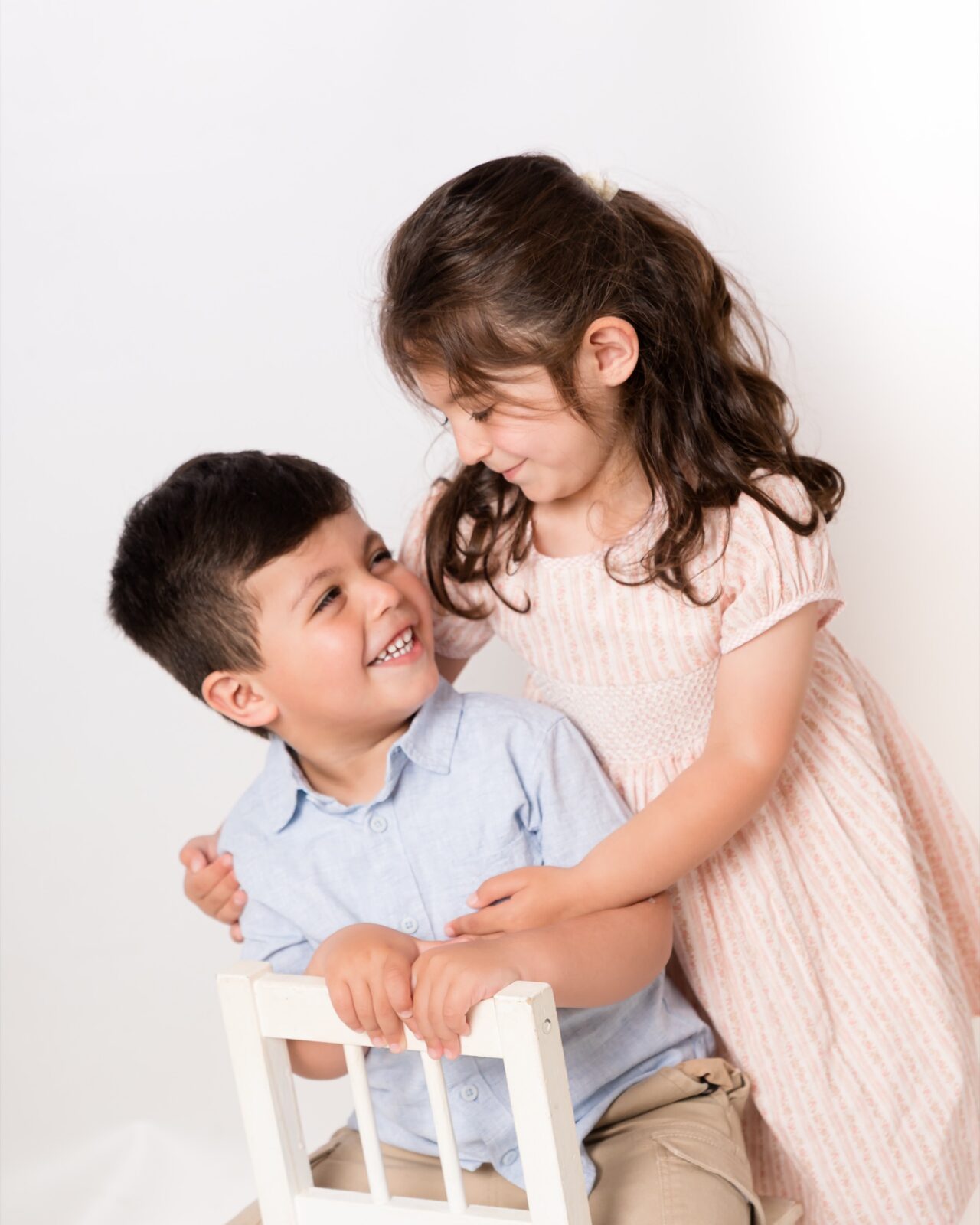
Serving families across Campbelltown, Camden, Narellan, and the broader Macarthur region of NSW, we've seen this play out repeatedly: a studio that feels calm and open transforms session energy within the first few minutes. Babies settle. Toddlers explore rather than cling. Parents stop worrying about how they look and start actually enjoying themselves — which is when real, authentic portraits happen.
For families thinking about how to prepare beyond the studio environment itself, our guide on family portrait wardrobe tips covers colour coordination and seasonal considerations — because what your family wears interacts with studio light more than most people anticipate.
Light as a Mood Setter
A bright, softly lit studio communicates something powerful before a single frame is captured. It signals: you are safe here, this will be beautiful, we know exactly what we're doing. That psychological reassurance is worth as much as any piece of equipment you'll ever purchase. Conversely, harsh light or murky shadows — even if technically fixable in post-production — communicate uncertainty and compromise.
Invest in the environment, and the environment does half the work for you. Every time, without exception.
Frequently Asked Questions
What makes a photography studio "bright" — is it just about window size?
Window size helps, but orientation matters far more. A north-facing window in Sydney delivers consistent, diffused daylight all day without harsh direct sun — no drama, no frantic curtain choreography. Ceiling height and wall colour also play a significant role: white or pale-toned surfaces act as passive reflectors, bouncing ambient light across the space and reducing contrast without any additional equipment.
Does Faithful Photography use natural light or artificial lighting for sessions?
Both, depending on session type and time of day. Our studios in Glen Alpine and Gledswood Hills are designed to maximise natural light as the primary source for portrait and family work. Where the session calls for more control — certain newborn setups, late afternoon bookings, or product detail work — we supplement with professional continuous and strobe lighting. The goal is always the most flattering, consistent result for each individual session.
How important is studio layout for a family or newborn session?
Extremely important, and consistently underestimated. A well-zoned studio means families have a comfortable, private area to prepare before stepping in front of the camera. For newborn sessions especially, a calm, warm, unhurried environment directly affects how settled a baby is — and therefore how the images turn out. Our studios are purposefully laid out with distinct preparation, photography, and waiting areas so nothing feels rushed or chaotic from the moment you arrive.
Are overcast days actually good for photography sessions?
Yes — often better than clear sunny days. Overcast skies act like a massive natural softbox, producing low-contrast, even light that's extraordinarily flattering for skin tones and fine detail. Portrait and family sessions on overcast Sydney mornings frequently produce some of our most beautiful results. The primary adjustment is white balance — cloud light runs slightly cool — but that's a minor tweak compared to the benefits of all that soft, even coverage with no harsh shadows to manage.
Where are Faithful Photography's studios located, and which areas do you serve?
We operate studios in Glen Alpine and Gledswood Hills in South-West Sydney, proudly serving families and clients across the Macarthur region — including Campbelltown, Camden, Narellan, Harrington Park, Gregory Hills, Mount Annan, Oran Park, and surrounding suburbs. We also welcome clients from across Greater Sydney who are looking for a photography experience that's warm, unhurried, and genuinely worth the drive.
Visit Faithful Photography Today
Our award-winning studios in Glen Alpine and Gledswood Hills are built around beautiful light, thoughtful space, and the kind of relaxed experience that turns a session into something your family will treasure for decades. Whether you're planning a newborn portrait, a family milestone, or a professional headshot, we'd genuinely love to hear from you.