

Key Takeaways
- Light and location are the foundation of beautiful family portraits — golden hour and open shade consistently deliver the most flattering, natural results.
- Connection beats perfection every time: authentic poses and candid moments make portraits feel genuinely emotional rather than staged.
- Preparation — from coordinated wardrobe choices to clear session expectations — is what separates a stressful shoot from a relaxed, joyful family experience.
Why Light Is the Single Most Important Variable in Family Portrait Photography
Ask any experienced photographer what separates a good portrait from a great one, and the answer is almost always the same: light. Camera gear matters, posing matters, wardrobe matters — but none of it saves a portrait shot in harsh, unflattering light.Golden Hour: The Photographer's Secret Weapon
Golden hour is not simply photographer jargon — it is a measurable, repeatable advantage. In summer, it begins roughly 60 to 90 minutes before sunset and delivers warm, directional light that flatters skin tones and wraps subjects in a luminous glow. If an evening session does not suit your family's schedule, the same quality of light is available one to two hours after sunrise. Avoid scheduling outdoor sessions between 10 am and 3 pm wherever possible. During those hours, the sun sits high and carves unflattering shadows beneath eyes and noses — the kind of shadows that age people unnecessarily and flatten the image.Making Open Shade Work for You
When midday sessions are unavoidable, open shade is your best friend. Position the family on the shadow side of a building, beneath a tree canopy, or under a porch. Face them toward the open sky rather than a solid wall; the diffused light wraps evenly around faces and eliminates squinting. One technique worth knowing: avoid dappled shade from trees entirely. Patchy light falling across faces looks uneven in the final image and is notoriously difficult to fix in post-processing. ---Choosing a Location That Flatters Your Family
Location choice directly affects how much editing work follows the session. A cluttered, distracting background forces either hours in post-production or an acceptance that the frame is simply busy. Intentional location selection is one of the most underrated skills in family portrait photography.What Makes a Background Work
The best backgrounds for family portraits tend to share a few qualities:- They are visually clean — a plain wall, a shaded garden corner, or an open field without competing elements.
- They complement skin tones — greens and soft natural textures flatter almost everyone.
- They have consistent light — no patches of sun breaking through, no harsh reflections.
- They feel emotionally relevant — a meaningful place adds a layer of story that a neutral studio backdrop cannot replicate.
Locations Around South-West Sydney That Photograph Beautifully
The Macarthur region and South-West Sydney offer genuinely spectacular portrait locations. Families in the area are spoilt for choice, from the open parklands of Mount Annan and the leafy streetscapes of Gledswood Hills to the heritage-rich surrounds of Camden. For families closer to the city fringe, Liverpool, NSW has several underrated green spaces that photograph beautifully in the late afternoon. White buildings and pale walls reflect light and can be used cleverly, but watch your white balance — they have a tendency to introduce cool casts that require correction in editing. ---Wardrobe Coordination: Cohesion Without the Costume Party
Clothing is one of the most visually decisive elements of any family portrait — and it is entirely within your control before the session begins. Getting it right does not require expensive outfits; it requires intention.The Neutral Palette Approach
Rather than dressing the entire family in identical outfits, aim for tonal cohesion. A palette of soft greys, taupes, creams, muted blues and pastel tones reads as effortlessly coordinated without looking staged. One parent in soft blue, another in cream, children in muted sage or terracotta — the result feels natural and timeless.- Avoid neon colours, loud logos and busy patterns — they draw the eye away from faces.
- Oversized knits, linen shirts and relaxed silhouettes often read better on camera than fitted styles.
- Plain tees and simple pieces from affordable shops photograph beautifully — price is not the point.
- Ensure every person is comfortable in what they are wearing; discomfort shows in posture and expression.
The Small Details That Make a Big Difference
Remove sunglasses before shooting. Clear pockets of phones and keys so fabric sits smoothly. Tuck in loose clothing tags. These tiny details are consistently the difference between a timeless portrait and one that announces the decade it was taken. ---Setting Clear Expectations Before the Session Begins
One of the most consistent sources of post-session disappointment is a mismatch between what a family expected and what was actually agreed upon. A frank conversation before the shoot eliminates almost all of it.What to Discuss With Your Photographer
- Deliverables — How many edited images are included? What is the estimated turnaround time?
- Style preferences — Are you after posed portraiture, candid lifestyle images, or a blend of both?
- Must-have shots — A full group shot, individual portraits, candid sibling moments — list them explicitly.
- Session length — Most family sessions sit comfortably in the 1–2 hour range. Beyond that, children (and adults) begin to lose focus.
- Weather contingency — What happens if it rains? Is there a studio option or a rescheduling policy?
- Children's temperament — Share any relevant context about anxious or shy children so the photographer can adapt their approach from the outset.
"Connection beats perfection every single time. When families stop trying to look perfect and start genuinely interacting with each other, that is the precise moment the magic happens."---
How to Pose Families So They Look Genuinely Connected
The single most common mistake in family portraiture is lining people up like a police line-up — everyone staring directly into the lens, shoulders square, smiles that communicate "I was told to do this." Connection-driven posing is an entirely different approach.Position People to Interact, Not to Perform
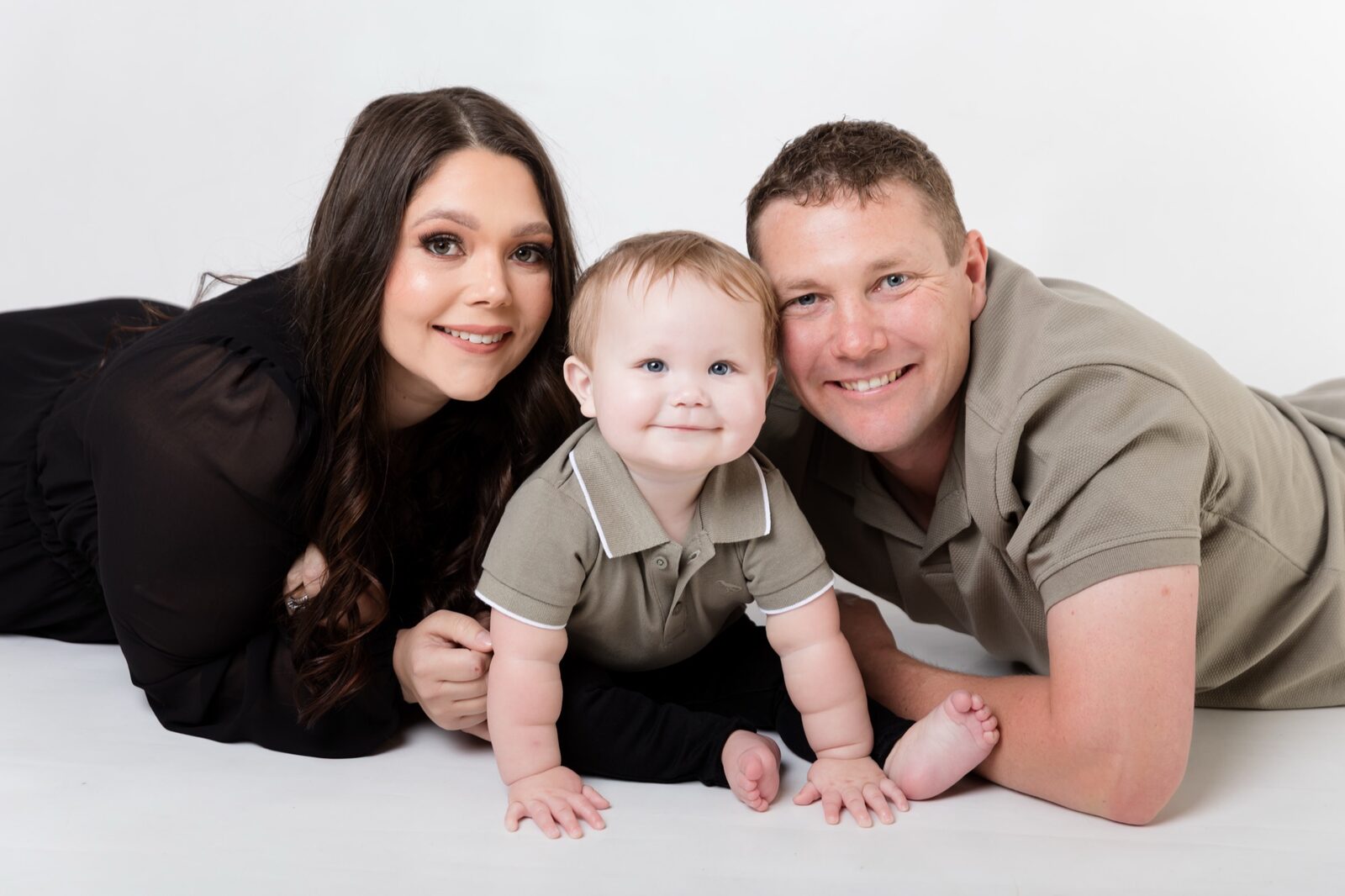
Authentic posing begins when you stop asking people to face the camera and start asking them to face each other. Have family members lean in, wrap an arm around a waist, rest a head on a shoulder. Let a child reach up toward a parent. Allow siblings to bump foreheads together. These small, honest gestures read as intimacy on camera — they make the photograph feel earned rather than manufactured. When faces turn toward each other rather than the lens, expressions relax automatically. You do not stage authentic emotion; you create the conditions for it to emerge.Shape, Spacing and Visual Strength
Intentional composition signals confidence. Scattered spacing signals amateur hour. Close the gaps between family members — keep torsos and faces tight in the frame so the emotional thread does not get lost in negative space. Use triangular and layered arrangements to add visual depth. A seated parent with a child in their lap and a standing parent behind creates an elegant triangular composition that reads as cohesive in the final image. Placing taller members at the back and shorter members at the front gives the viewer a natural visual hierarchy without feeling forced.- Avoid symmetrical, rigid arrangements — they feel formal and cold.
- Encourage movement between shots — walking, laughing, spinning children — to generate genuine candid moments.
- Prompt interaction rather than expression: "whisper something funny" produces a far more authentic laugh than "say cheese."
Ready to Book Your Family Portrait Session?
At Faithful Photography, our South-West Sydney studios in Glen Alpine and Gledswood Hills are designed to make every family feel relaxed, celebrated and beautifully photographed — from the first hello to the final gallery delivery.
Camera Settings and Technical Basics for Sharper Family Portraits
You do not need to be a technical expert to take beautiful family portraits — but understanding a handful of key settings will give you a significant advantage, especially when working with young children who do not hold still.Aperture, Shutter Speed and ISO
For family groups, a wider aperture like f/2.8 creates beautiful background separation but risks leaving one or more family members out of focus. With groups of three or more, f/4 to f/5.6 is generally the safer choice — it keeps everyone sharp without sacrificing too much of the background blur effect. Shutter speed should stay at or above 1/250s when children are involved. Kids move constantly and unpredictably; a slower shutter introduces motion blur that is impossible to recover in editing.White Balance and Colour Accuracy
White balance is the setting that controls whether your image reads as warm or cool, and it has an outsized impact on skin tones. In golden hour light, a warmer white balance (around 5500–6500K) renders skin tones richly. In open shade, nudge it slightly warmer than the default to counteract the natural blue cast from the sky. If you are shooting RAW files, white balance can be adjusted entirely in post-processing — which is one of the strongest arguments for shooting RAW when image quality truly matters. ---Working With Children: Keeping Energy High and Anxiety Low
Children are not small adults. They do not respond to the same cues, they tire faster, and they will almost certainly need a break before the session is over. Experienced photographers plan for this from the outset.Strategies That Actually Work
- Schedule sessions around nap times — a well-rested toddler is an entirely different photographic subject than an overtired one.
- Build in natural movement breaks every 20 to 25 minutes; let children run, jump or explore briefly before coming back to the session.
- Bring a small snack to manage energy and mood — just avoid anything that stains clothing.
- Let children lead occasionally: if a child is fixated on a flower, a stick or a puddle, follow their curiosity. Some of the most memorable portraits come from unscripted moments.
- Keep the atmosphere playful and low-pressure — children read adult anxiety immediately and mirror it.
Newborns and Babies Require a Different Approach
Newborn and early baby sessions are a specialised discipline in their own right, requiring particular skills around safety, timing and comfort. Our dedicated newborn photography in Sydney sessions are designed with this in mind — allowing plenty of time and flexibility so every family leaves with genuinely treasured images. ---Beyond the Family Portrait: Expanding Your Photography Sessions
Family portraiture often opens the door to a range of connected session types that celebrate the different chapters of family life. Many families in the Macarthur region and across South-West Sydney are surprised by how many meaningful session options exist beyond the standard group portrait. Maternity photography in Sydney offers a beautiful opportunity to document the anticipation and glow of pregnancy — a season that passes quickly and deserves to be remembered well. Our maternity portrait session ideas guide is a great starting point if you are planning ahead. For families celebrating a first birthday, a cake smash photography session in Sydney is consistently one of our most joyful and popular options. The combination of genuine childhood delight and beautifully styled setups makes for images that families treasure for decades. Our detailed guide on cake smash studio setup and design walks you through what to expect. For larger gatherings — reunions, multi-generational families or extended family milestones — our extended family sessions are designed to manage the beautiful complexity of larger groups with warmth and efficiency. ---Frequently Asked Questions
What is the best time of day for a family portrait session outdoors?
Golden hour — the 60 to 90 minutes before sunset, or the equivalent window after sunrise — consistently produces the most flattering, warmly lit family portraits. Midday sessions are workable in open shade, but the quality of light during golden hour is genuinely difficult to replicate at any other time of day. We build our outdoor session scheduling around this window wherever possible.
How do I keep young children calm and cooperative during a portrait session?
Timing matters enormously — scheduling around nap times and avoiding sessions when children are hungry reduces friction significantly. Keep the atmosphere playful and pressure-free, plan regular movement breaks, and bring a small snack. At Faithful Photography, we work at the child's pace rather than forcing them through a rigid shot list, which tends to produce far more natural and genuine results.
What should our family wear to a portrait session?
Aim for tonal cohesion rather than matching outfits. A palette of soft neutrals — creams, muted blues, sage greens, taupes — reads as effortlessly coordinated without looking staged. Avoid bright neons, large logos and busy patterns, which draw attention away from faces. Most importantly, wear something comfortable — genuine ease shows up in posture and expression in ways that no amount of posing can replicate. Our wardrobe tips guide covers this in much more detail.
Where are your studios located and what areas do you serve?
Faithful Photography operates studios in Glen Alpine and Gledswood Hills, serving families across the Macarthur region and South-West Sydney — including Campbelltown, Camden, Narellan, Harrington Park, Oran Park, Gregory Hills and beyond. We also work with families travelling from further afield who are looking for a premium portrait experience in South-West Sydney.
How long does a typical family portrait session take?
Most family portrait sessions at Faithful Photography run between one and two hours. This gives enough time to work through a range of setups — group shots, individual portraits and candid moments — without pushing children past their comfortable engagement window. Extended family sessions with larger groups may run slightly longer; we discuss session length and structure during the booking process so everyone knows what to expect.
Do you offer hair and makeup services before the session?
Yes. Professional hair and makeup services are available to help you look and feel your absolute best on the day. Many of our clients find that having professional styling done immediately before the session removes a significant source of pre-shoot anxiety, letting them arrive relaxed and camera-ready. Details are available on our services page.
Visit Faithful Photography Today
Faithful Photography's studios in Glen Alpine and Gledswood Hills are open to families across South-West Sydney and the Macarthur region. Whether you are ready to book or simply want to ask a question, we would love to hear from you — every great family portrait starts with a conversation.