Key Takeaways
- Stiff poses and forced smiles are the primary culprits behind weird family photos that make you cringe — natural movement and genuine prompts are the fix.
- Clothing and styling choices have a bigger visual impact than most families realise; coordinated palettes outperform matching outfits every single time.
- Technical elements — lighting, angles and timing — compound any posing or wardrobe mistake, which is why skilled direction matters more than good equipment alone.
Why Stiff Poses Create Weird Family Photos Worth Cringing Over
The Lineup Problem
It starts innocently enough. A photographer says "stand together over here," and before anyone has made a single decision, the whole family has arranged itself like a police line-up — shoulders squared to the lens, arms pinned to sides, expressions hovering somewhere between polite and catatonic. This is the lineup problem, and it produces some of the most reliably cringe-worthy results in portrait photography. People are not furniture. Arranging them with geometric precision might look tidy in the viewfinder, but the resulting image communicates zero warmth and even less personality. The compound effect is real. When everyone also happens to be wearing identical outfits (more on that shortly), the photo stops being a portrait of a family and starts looking like a product shot for a discount homewares catalogue.How Natural Positioning Changes Everything
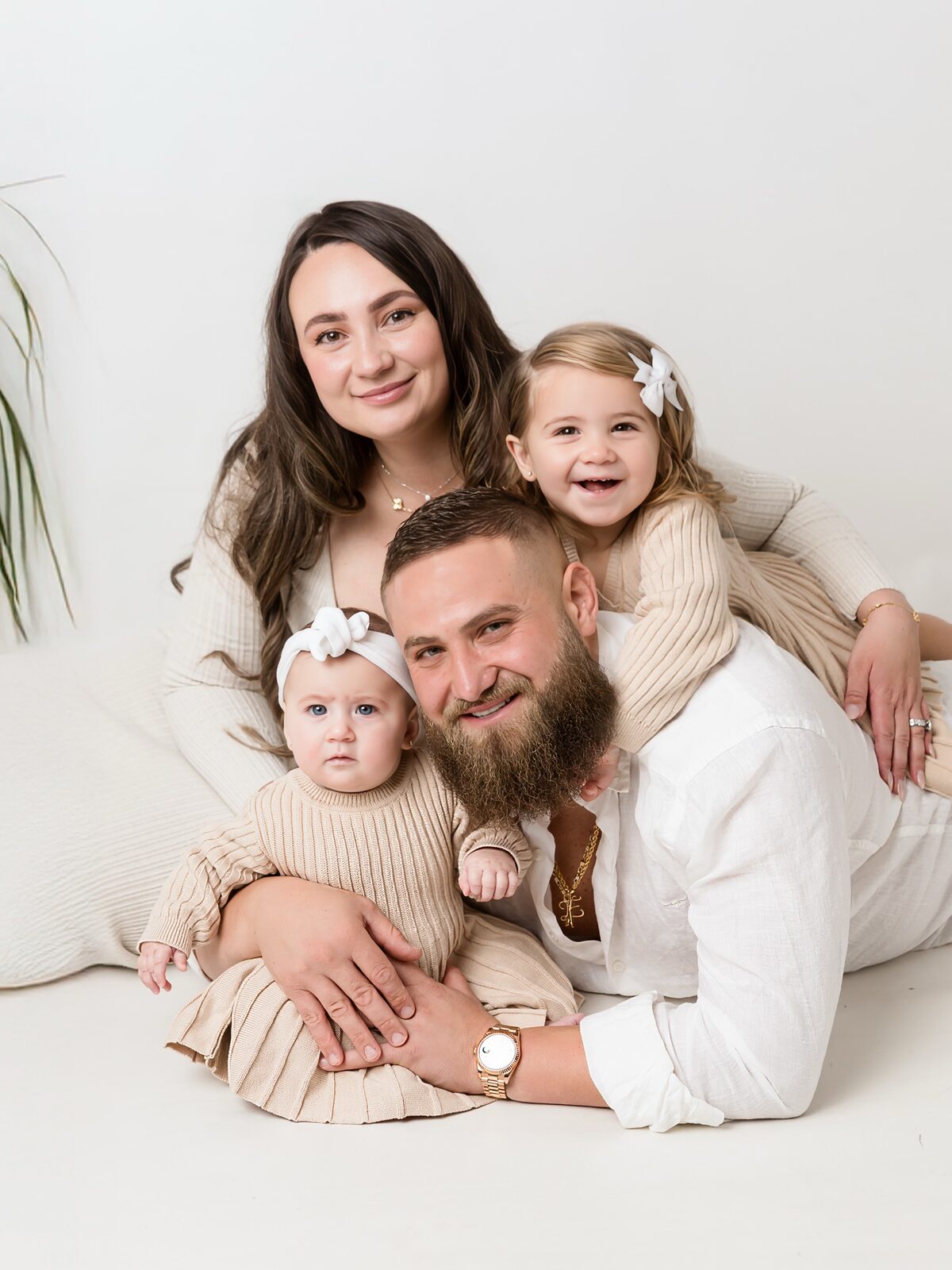
The antidote is movement and interaction, not a different version of the same stiff pose. At Faithful Photography, our photographers prompt families to do something rather than simply stand somewhere.- Sit on laps or lean into each other's shoulders.
- Walk toward the camera as a group, mid-stride.
- Create height variation — some seated, some standing, little ones in arms.
- Have siblings lean in for a whispered secret while the camera fires.
Forced Smiles: The Single Fastest Route to Cringe
Why the Held Grin Always Fails
Ask someone to hold a smile for ten seconds while you adjust your settings and you will watch, in real time, as the joy drains from their eyes. The muscles clamp. The Duchenne markers — the little crinkles around the eyes that signal a real smile — disappear. What remains is a grin that technically ticks all the boxes and emotionally delivers nothing. Forced smiles are easier to spot than most people think, and they are the quickest way to produce one of those weird, hollow images that nobody wants printed on canvas.Engineering Genuine Reactions
The best family portrait photographers aren't puppet masters demanding a smile on cue — they're more like directors setting up a scene and then getting out of the way. At Faithful Photography, we use prompts that generate actual reactions:- Ask Dad to tell the worst joke he knows — and watch the kids' faces.
- Have siblings retell the most embarrassing family story they can remember.
- Whisper something ridiculous to a toddler and let them react.
- Get Mum to tickle the youngest just before the shutter fires.
"The line between a cringe-worthy lineup and a frame you'll actually hang comes down to one thing: whether the photographer knows how to make people forget the camera is there."---
What Clothing Actually Ruins a Family Portrait
Matching Outfits vs. Coordinated Palettes
Clothing causes more damage to family portraits than almost any other single factor — not because it's more important than emotion, but because the wrong wardrobe choices announce themselves immediately and loudly. Matching outfits are the most common offender. Three adults and two children in identical navy linen sets might look cohesive on paper; in practice, the photo becomes about the clothes rather than the people wearing them. Coordinated palettes are the fix. Choose a colour story — soft neutrals, earthy tones, or complementary jewel colours — and let each family member interpret it in their own way. Three people in complementary blues, taupes, and whites look intentional. Three people in identical striped sets look like a promotional photo for a budget supermarket.The Trends That Age Badly
Trend-driven styling is a one-way ticket to exactly the kind of weird family photos that resurface at Christmas and make you want to quietly close the laptop. Consider:- Novelty costume themes (superhero onesies, character squads) — embarrassing within two years, guaranteed.
- Heavy trend-driven hair and makeup that anchors an image to a very specific, very temporary moment.
- Clashing patterns — stripes on plaid, neon beside pastel — that compete for the eye's attention and make the group read as chaotic rather than cohesive.
Lighting and Angles: The Technical Sins That Compound Every Other Mistake
How Bad Light Makes Everything Worse
Fix your posing, nail your wardrobe, get a genuine laugh out of everyone — and bad lighting will still sink the image. Flat, direct flash washes out skin tones, creates harsh shadows under the eyes and nose, and strips the three-dimensional quality from faces. Midday outdoor light does similar damage — blown-out highlights on foreheads, deep eye-socket shadows, and squinting that reads as grimacing. Professional studio photography controls all of this. Our Glen Alpine and Gledswood Hills studios are built around purpose-designed lighting rigs that wrap light around subjects rather than hitting them head-on.Angles, Timing and the Off-Blink Problem
Off-timing is what creates the closed-eye, mid-laugh, mid-blink frame that always seems to be the sharpest one in the sequence. It's not bad luck — it's a function of shooting cadence and knowing when the peak of an expression is actually occurring, not half a second before or after. Camera angle matters too. Shooting from below creates unflattering perspective distortion. Shooting from too far above flattens the scene. The sweet spot — eye-level or marginally elevated — consistently produces the most natural, proportionate results. ---Ready to get family portraits you'll actually love?
Faithful Photography's studios in Glen Alpine and Gledswood Hills are designed specifically to produce relaxed, authentic family portraits — no cringe-worthy lineups, no hollow smiles, no wardrobe disasters. Just real moments, beautifully captured.
Why Faithful Photography Gets Family Portraits Right
Direction Over Decoration
There's a real difference between a photographer who sets up props and hopes for the best, and one who actively directs the energy in the room. At Faithful Photography, every session is guided from start to finish — we manage the pacing, prompt the interactions, and read the room to know when to push for an active moment and when to hold back and let something quiet develop. Our family photoshoots in Sydney are structured to give every age group — toddlers, school-age kids, teenagers, adults — space to be themselves rather than perform for the camera.Serving the Macarthur Region and South-West Sydney
We're proud to be the studio of choice for families across Campbelltown, Camden, Narellan, Gregory Hills, Oran Park, and the broader Macarthur region. Whether you're looking for Campbelltown photographers or searching for a studio closer to Gledswood Hills, our two studio locations put professional portrait photography within reach of the whole region. We also offer extended family sessions for multigenerational shoots — grandparents, adult children, and the newest additions all in one beautiful, coordinated portrait. ---Avoiding the Most Common Mistakes: A Practical Guide
Before the Shoot
Most of the worst outcomes in family photography are preventable before anyone steps in front of a camera. Here's what actually makes a difference:- Plan your wardrobe in advance. Lay everything out the day before. Check that colours coordinate — not match — and that nobody is wearing anything with a large, distracting logo or pattern.
- Brief the kids honestly. Tell them what's happening, how long it will take, and what comes after. Surprises breed meltdowns; preparation breeds cooperation.
- Eat beforehand. A hungry toddler is a non-negotiable disaster in portrait photography.
- Trust your photographer's prompts. When they ask you to do something that feels silly, do it anyway. Silly prompts produce genuine reactions.
During the Session
- Don't hold your smile between shots — let it drop and rebuild naturally.
- Focus on the people around you, not the lens.
- Let kids lead occasionally — some of the best family images come from following a toddler's spontaneous impulse.
- Relax your jaw. Consciously. It makes a measurable difference to your expression.
What Makes a South-West Sydney Family Session Different
South-West Sydney has a particular energy — big families, strong community ties, a mix of established suburbs and growing new estates. Campbelltown, Camden, and the Narellan corridor have all seen enormous growth in the past decade, and with that growth has come a generation of young families who want something better than the generic chain-studio approach. Faithful Photography was built for exactly this community. Our studios feel warm and unhurried. Sessions aren't rushed on a conveyor belt — they're paced to match your family's rhythm. Our Camden photographers page has more on what a session looks like for families in that part of the region. If you've had a bad experience elsewhere — stiff results, impatient direction, an online gallery full of frames nobody wants to print — we'd genuinely love the chance to show you what a properly directed session can produce. ---Frequently Asked Questions
What causes weird family photos that make everyone cringe?
The most common culprits are rigid, unnatural posing (the classic shoulder-to-shoulder lineup), forced smiles held too long, wardrobe choices that compete with faces rather than complementing them, and technical issues like harsh direct flash or poor timing. It's rarely one thing — it's the compound effect of several small mistakes hitting the same frame.
Should we wear matching outfits for our family photoshoot?
Coordinated is better than matching. Choose a colour palette — perhaps soft neutrals, earthy tones, or complementary jewel colours — and let each person wear something that fits within that story. Identical outfits tend to make the photo about the clothing rather than the family. Our wardrobe guide has detailed advice on what works in every season.
How do you get genuine smiles rather than forced ones in family portraits?
We use prompts that generate real reactions rather than asking people to hold a smile. Dad jokes, family stories, whispering something unexpected to a child, or having siblings interact with each other — these all create authentic expressions that the camera can capture mid-reaction. The goal is to make the family forget the lens is there.
Where are Faithful Photography's studios located?
We have two studios in South-West Sydney — one in Glen Alpine and one in Gledswood Hills, NSW. We serve families across the Macarthur region including Campbelltown, Camden, Narellan, Gregory Hills, Oran Park, Mount Annan, and surrounding areas. Both locations are purpose-built portrait studios with professional lighting setups.
What types of photography sessions does Faithful Photography offer?
We specialise in newborn, family, maternity, cake smash and corporate photography. We also offer extended family sessions for multigenerational portraits, hair and makeup services to help everyone arrive camera-ready, and gift vouchers for those booking on behalf of a friend or family member.
How far in advance should we book our family portrait session?
We recommend booking at least four to six weeks ahead, particularly around school holidays, Christmas, Mother's Day, and peak newborn periods (spring and early summer). Popular weekend slots fill quickly. You can check availability and book directly through our website, or get in touch to discuss what works best for your family.
Visit Faithful Photography Today
If you're ready to swap awkward lineups and hollow grins for portraits your family will actually treasure, our studios in Glen Alpine and Gledswood Hills are waiting for you. Every session is guided, unhurried, and designed to bring out the real you — no cringe required.